On this page6 sections, 14 min read
Bottom line
To convert a chess demo class into a decision, give the child one focused task, teach what it shows, recheck it, and tell the parent what you saw and what you would do next. Then follow up in up to five short touches over about a week, and stop when the family says no or asks for no more messages.
TL;DR
- A demo class should end with an offer the family can answer: the batch, the day, the fee and the start date, plus an easy way to say not now.
- Run one task that shows the child's level, teach what it shows, recheck on a similar position, and describe only what happened in the session.
- Follow up in up to five touches over about a week, and stop straight away after a refusal or a request for no contact.
- Measure attended trials and first paid enrolments inside a window you set in advance, and keep undecided families in their own column.
Key facts
- SupaTutor's September 2026 guide for online tutors describes a seven-stage chain from discovery to follow-up, with a diagnose, teach and recheck pattern in the demo itself. It is written for tutoring in general, not chess.[6]
- A task, a teaching moment and a recheck give the parent something the child actually did to talk about. One session supports a recommendation; it does not prove a child's level.
- ChessCore's lead follow-up suggestion works from the enquiry's source, stage and how long ago it was captured. It does not see the trial record or family names, staff add checked details, and the draft does not send itself.
- A demo conversion rate needs a fixed counting window: attended trials in the denominator, first paid enrolments inside the window in the numerator, and undecided families reported separately.
Why do families who liked the demo still not enrol?
A family can enjoy a demo class and still say no or say nothing, usually for reasons that have little to do with the teaching: the timetable does not fit, the fee is more than they planned, they are comparing another academy, the child is unsure, or nobody told them what the next step was. Only the last one is fully in your hands on the day. Work out which reason applies before you try to persuade anyone.
A demo costs the coach and the family time, plus the work of arranging the visit, so record a next step before the session ends and that effort leads to a clear decision instead of a vague goodbye. Name the offered batch, confirm the fee, and ask whether the parent wants a written recap. Assign the follow-up to one person and put the agreed date in the demo record, especially when another coach will handle the next conversation.
What should a chess demo class include?
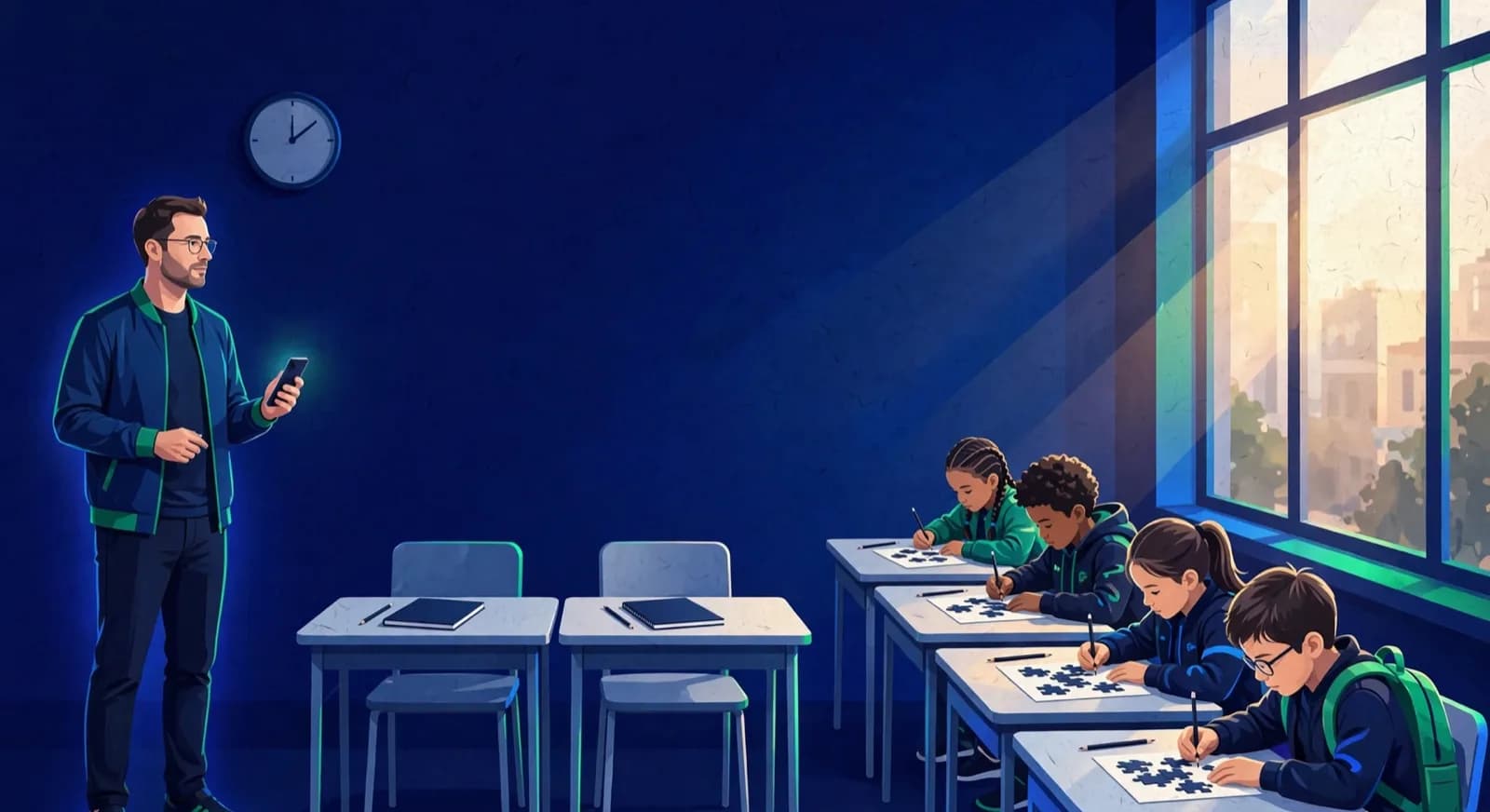
A chess demo class is the trial session where a coach finds one learning need, teaches it and rechecks it, then uses what the child did as the basis for an offer. Confirm the visit, run one focused task, teach what it showed, and recheck on a similar position so the parent conversation rests on something the child actually did. SupaTutor's 2026 guide for online tutors describes the same diagnose, teach and recheck shape inside a longer seven-stage chain [6]. Give the parent one observation, then the plan, the fee and the start date.
| Student | Task to run | What to teach and recheck | What to tell the parent |
|---|---|---|---|
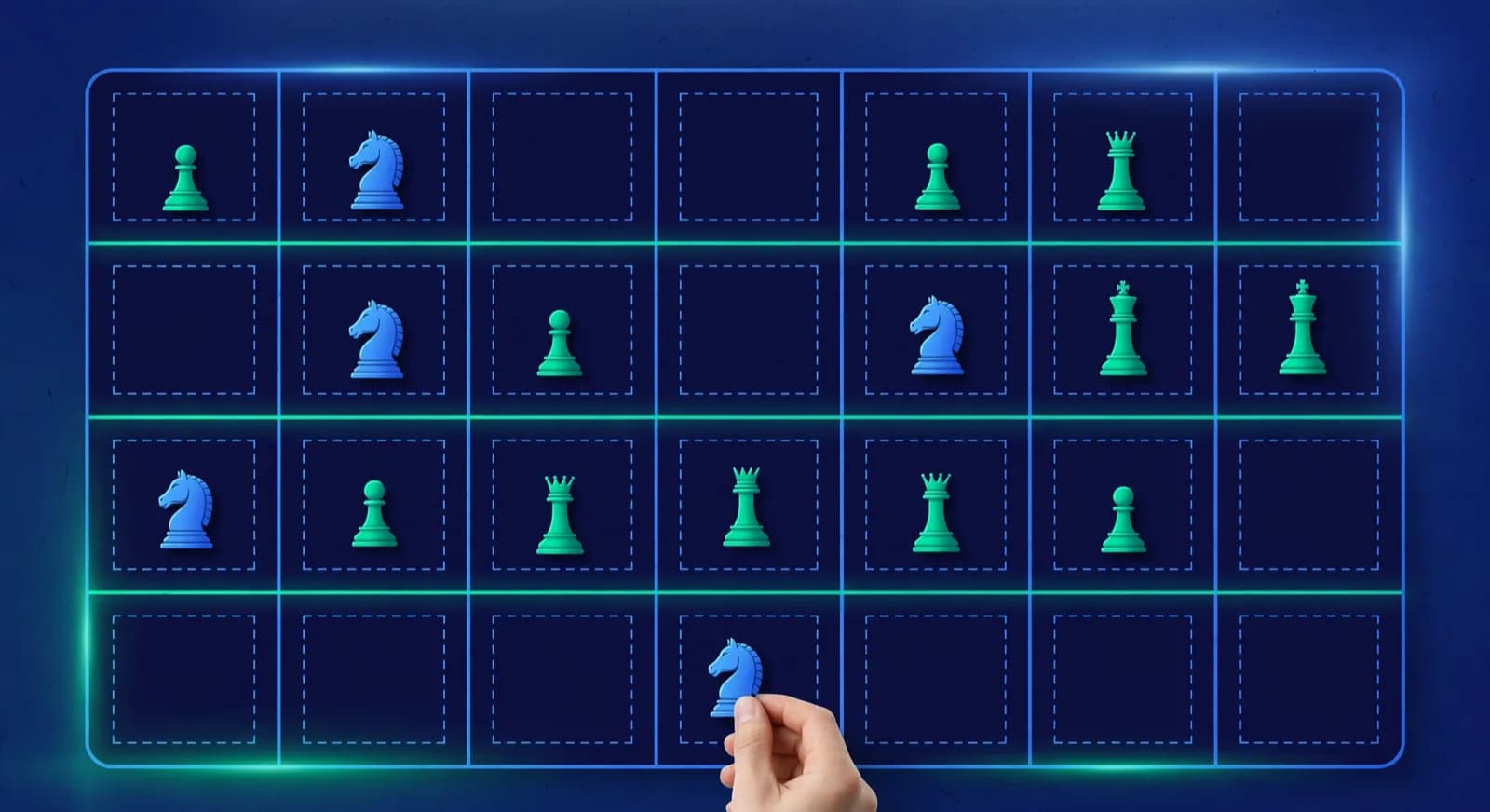
| Beginner who knows how the pieces move | Set up a legal position with a few unprotected pieces. Ask which of the child's pieces the opponent could capture, and which move makes them all safe. | Teach one habit: before each move, ask what the opponent can capture. Recheck on a similar position with the pieces placed differently. | Which pieces the child noticed unaided, which they missed, and whether the habit held on the second position. |
| Returning player with some games behind them | Ask for one recent game, or play a short one. Pick one moment where they chose a move and ask them to explain why. | Pick the single pattern that cost them most, for example leaving a piece undefended, and teach it. Recheck with a position of the same type from a different game. | The one pattern you would work on first, what the child did on the recheck, and how a weekly batch would practise it. |
Use positions you have set up yourself and know are legal. This is a teaching routine, not a validated placement test, so say what today's task suggested rather than claiming you have measured the child's level. Keep the child doing most of the thinking: the parent is watching how you respond to them as much as what you teach.
- Before the demo: confirm the slot, send the address or link, and send an evening-before reminder, because a no-show is a decision lost before the class starts.
- During the demo: run the task, teach, recheck, and write down one observation in the child's own words or moves.
- At the end: tell the parent the batch, the day and the fee in person, and say plainly that they can take time or say no.
- After the demo: send a written recap the same day that restates the observation, the offered batch and the fee, and agree who owns the follow-up.
- On a yes: make the first payment simple, so the decision and the enrolment happen together.

Lucas M.
Batch B2 · Thursdays · joined Aug 2025
1342
Academy rating · Lichess games synced
Won vs. 1410 · French Defense
Best gameMissed fork on move 23
Homework setName the fee at the end of the demo even when it feels awkward, because a parent cannot decide on a price you did not state. A parent who leaves knowing the batch, the day and the price can decide. One who leaves with a vague we would love to have you has to chase you. Check the open seat before you say it: our guide to chess academy batch scheduling keeps the timetable accurate, and getting families to book a trial in the first place belongs to our guide to getting more students.
Record the observation, the offer and the agreed next step in one place while the session is fresh. That is the job of tracking each trial booking in a chess academy CRM or, at a small scale, a sheet with the same columns.
What do you say when a parent hesitates?
Answer the reason the parent gives, then offer a next step that fits it. That next step can be a different slot, a later start, a clearer explanation of what the fee covers, or an agreed decision not to continue. Pressure after a hesitation costs you the relationship; a calm reply keeps the door open for next term or a sibling. The scripts below are starting points to put in your own words.
| Situation | What you might hear | What to say | Next step you can offer |
|---|---|---|---|
| The timing does not fit | Evenings are difficult this term, or exams are close. | Thank you for telling me. This batch meets on [day]. I can tell you when the next batch opens, or leave it with you. Which would you prefer? | Another slot, a later start, or a dated note in the record to contact them then, only if they agree. |
| The fee is a concern | That is more than we expected. | That is fair. The fee covers [number] sessions a month, a batch of up to [number] children, homework and a monthly update. If it does not fit, I would rather you tell me now. | Explain what is included, and offer a different batch or format only if your academy really offers one. |
| The parent wants time | Let us think about it. | Of course. I will send a short recap tonight with the batch, day and fee. Shall I check in on [day], or would you rather contact me? | One agreed date, or no date at all if they prefer to come back to you. |
| The child does not want to continue | The child says they would rather not come. | That is useful to know, thank you. Chess works best when the child wants to be there. If that changes, you are welcome to get in touch. | Close warmly, record the decision, and send nothing further. |
| The family says no | We have decided not to enrol. | Thank you for coming along. I will not send more messages unless you ask me to. | Stop the sequence. Record the reason if they gave one. |
What is the five-touch follow-up sequence?
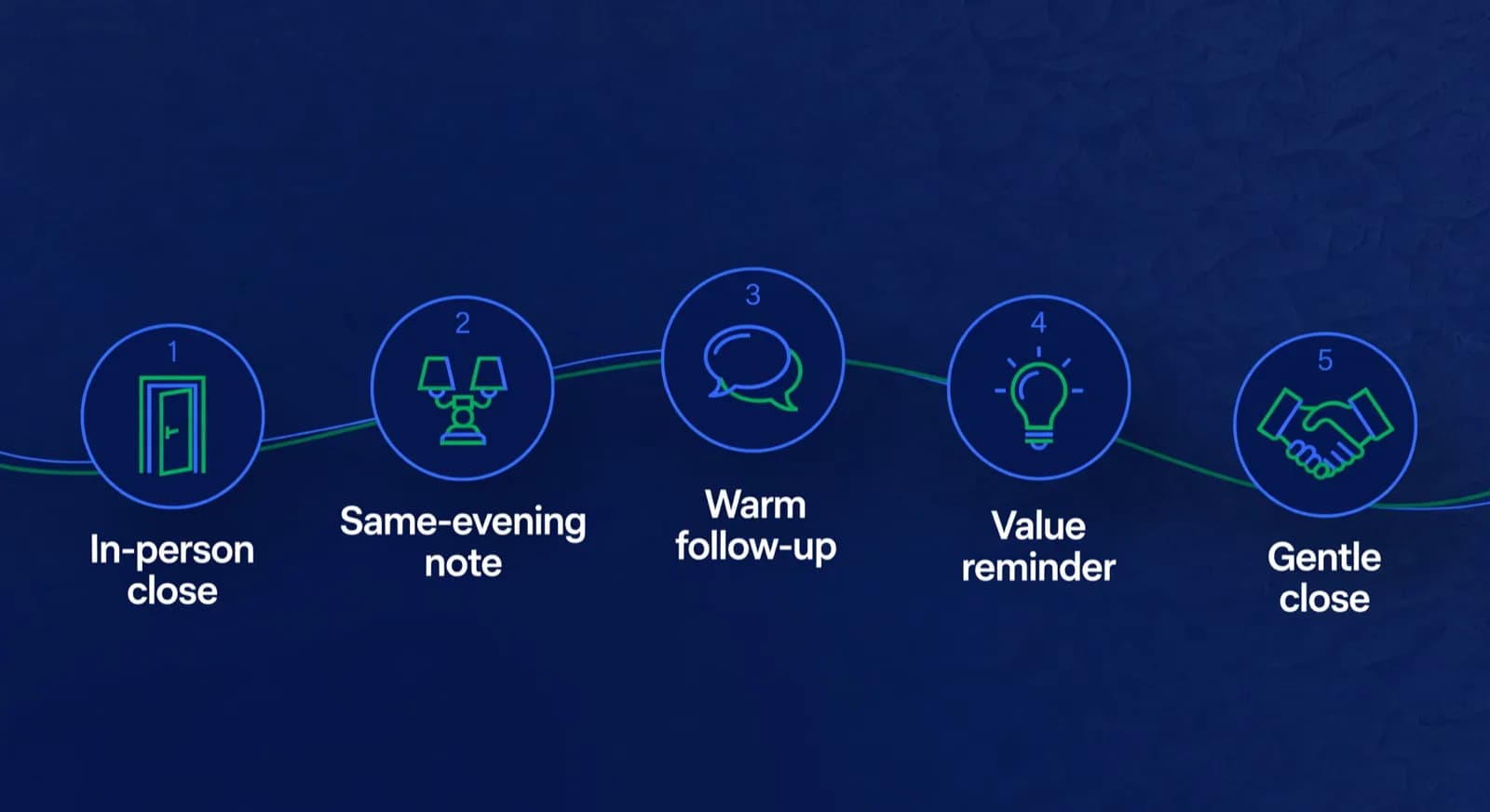
Run up to five touches over roughly a week, counting the conversation at the end of the demo as the first. Send a same-day recap of the task, what you observed, the recommended batch, the fee and the next step. If the family has not replied, check in warmly a couple of days later. On day four or five, send one short, useful example tied to what you observed. Close the loop politely about a week out. Every touch is conditional: if the family replies, decides or asks you to stop, the remaining touches do not go.
| Touch | Timing | Message and job | Skip this touch if |
|---|---|---|---|
| 1. In-person close | At the door, end of demo | State the batch, day and fee, and say the family can take time or decline. | Never skipped, but keep it short if the family is in a hurry. |
| 2. Same-day recap | That evening, or next morning if the demo ran late | Thank them, restate the observation, the plan, the fee and how to confirm or ask a question. | The family said they want no messages. |
| 3. Warm follow-up | About two days later | Ask whether they have questions about the plan, the timetable or the fee. | They have already replied, accepted or declined. |
| 4. Useful example | Day four or five | Send one short example tied to what you observed, such as a position and a question to try at home. | They have decided, or asked you to stop. |
| 5. Gentle close | About a week out | A final, friendly check that leaves the door open and asks for nothing more. | They have decided, or you agreed a different date with them. |
Keep every message specific and respect the answer. Open with the observation from the demo rather than general praise. Close the sequence by the agreed date, record the decision, and make sure only one person owns the follow-up so a family never hears from two staff members.
ChessCore, which we build, can suggest a follow-up draft from an enquiry's source, stage and how long ago it was captured. It does not see the trial record or family names, so a staff member adds the observation from the demo, checks the details and sends the message. The draft does not send itself.
How do you remove friction once a parent says yes?
When a parent decides to enrol, make the first payment easy. This is where decisions can stall: a parent who has said yes is sent to a desk, a form or an invoice that arrives days later. In India that usually means UPI [1], the account-to-account rail most families already use. An AutoPay mandate [2] set up once through Razorpay [3] can collect the monthly fee each cycle, and a Stripe [4] payment link covers families who would rather pay by card. Send the link in the same thread as the offer so the yes and the first payment can happen together.
Agree a follow-up channel with the parent when booking the demo. If the family chooses WhatsApp [5], keep the recap, the offer and the payment link in that conversation so they can find everything together. When the demo observation, the offer, the follow-up and the payment link live in one place, the sequence does not depend on a founder's memory at the end of a long teaching day. Our fee structure guide and the billing tools behind it cover the collection side, and our comparison of spreadsheets and dedicated academy software shows what breaks when this flow lives in a notebook and a chat thread.
- Send a payment link or recurring mandate in the same thread as the offer, so the yes and the payment are a single moment.
- Pre-fill what you can, the batch, the day and the fee, so the parent confirms a decision rather than completing a form from scratch.
- Record the demo, the observation and each follow-up touch in one place, so the sequence runs on a record rather than on memory.
- Confirm enrolment straight away with a warm, specific welcome that matches the attention that won the family.
- If the answer is no for now, close warmly and keep the record, because this term's polite no can be next term's enrolment.
How do you measure chess demo class conversion?
Measure it as first paid enrolments divided by attended trials, counted only after a window you set in advance has closed. Choose the window before you start, for example 14 or 30 days from the trial: a trial held on 3 March with a 30-day window is counted on 2 April. Families who have not decided by then go in a separate pending column, so a slow decision is not scored as a loss and a quick yes is not scored as a win before payment.
| Trial date | Attended | Decision | First fee paid by window end | Reason given |
|---|---|---|---|---|
| ____ | ____ | ____ | ____ | ____ |
| ____ | ____ | ____ | ____ | ____ |
| ____ | ____ | ____ | ____ | ____ |
Use four values for the decision column: enrolled, declined, postponed and pending. Postponed means the family named a later date; pending means they have not answered. Keep both out of the conversion figure until they resolve, and report them beside it. With your own rows filled in, the figure is simply the number of first paid enrolments over the number of attended trials, and it means nothing until you have enough trials to compare month with month.
When the figure is low, find the step that leaks rather than redoing everything. If families attend but do not reply, look at the recap and the observation. If they reply positively but stall at payment, look at the friction at the yes. If they never book the trial after enquiring, the problem sits upstream of this guide, in the funnel our getting-more-students article covers. The reason column tells you which of fit, price and timing you are hearing most.
Fees · October · all batches
136 of 148 paidCollected · this term
92%Lucas M. · October · $180
Card AutoPay · receipt sent to Müller family
Mia G. · October · $180
Payment link opened in WhatsApp
Batch B2 · 12 of 14 paid
No bank-transfer screenshots needed
AutoPay mandates · 41 active
Renew monthly without reminders
Frequently asked questions
How do I get parents to enrol after a demo class?
End the demo with a clear offer, then follow up in a defined sequence. At the door, tell the parent the batch, the day and the fee, and say they can take time. That evening, send a short recap that opens with one specific observation about their child, restates the offer and says how to confirm or ask a question. If there is no reply, check in warmly two days later. Stop at once if the family declines or asks for no more messages.
How many follow-ups should I send after a chess demo?
Up to five touches over about a week: the end-of-demo conversation, a same-day recap, a check-in a couple of days later, a short useful example on day four or five, and a polite close at about a week. Each touch is conditional. If the family replies, decides or asks you to stop, send no more. Open each message with the observation you made about the child rather than general praise, and keep the batch, fee and next step consistent.
Why do families attend a demo but not enrol?
There is no single cause. Common reasons include a timetable that does not fit, a fee above what the family planned, a comparison with another academy, a child who is unsure, or no clear next step after the class. You can only fix the last one on the day. Ask which reason applies, record it in the trial record, and reply to that reason: another slot, a clearer explanation of the fee, more time, or a respectful close.
Should I charge for a chess demo class or make it free?
Either can work, and the choice depends on your market and the cost of coach time. A free demo asks nothing of the family but their time. A small fee can filter for intent but adds a decision before they have seen your teaching. Whichever you choose, end the session with a clear offer and a planned follow-up, because that is the part you control. Track the result for each approach in the same table so you can compare with your own data.
How do I measure my demo class conversion rate?
Divide first paid enrolments by attended trials, counted after a window you set in advance, such as 14 or 30 days from the trial. Keep families who are postponed or still pending in their own columns until they decide, and report them beside the rate. A low figure points to a step to inspect, such as the recap, the follow-up or the payment step, and the reason column shows whether fit, price or timing comes up most.
Should the demo diagnose a specific learning gap?
Yes. Run one focused task, teach what it showed, then recheck on a similar position, so you can tell the parent what you saw and what you would work on first. Use positions you have set up yourself and know are legal. Avoid over-claiming from one session: say what today's task suggested, not that you have mapped the child's chess future. The same-day recap should repeat the observation and the recommended batch.
Sources
- [1]Unified Payments Interface, Wikipedia · accessed 2026-07-15
- [2]UPI Autopay for Recurring Payments | NPCI · accessed 2026-10-16
- [3]Razorpay subscriptions and recurring payments documentation · accessed 2026-07-15
- [4]Stripe Billing documentation · accessed 2026-07-15
- [5]WhatsApp, Wikipedia · accessed 2026-07-15
- [6]How to convert a demo class into a paid student: a guide for online tutors (SupaTutor, 9 September 2026) · accessed 2026-10-16
Written by Abhishek Tiwari
ChessCore
Drafted with AI, fact-checked and approved by a human before publishing, the same guardrail our product applies to every report it sends. Read our editorial standards.
Keep every trial booking and next step in one place
ChessCore keeps enquiries, trial bookings and follow-up drafts in one place, and your team decides what to send and when.
- Roster import from the spreadsheets you already keep
- Lichess and Chess.com connections, batches, and fee plans
- First reports in week one, after your approval
- Free plan, no credit card required