On this page12 sections, 21 min read
- How should a chess academy structure its WhatsApp channels?
- Which tools send WhatsApp for chess academies?
- What rules keep a batch group useful?
- What should never be said in a group?
- Which WhatsApp Business features matter?
- Should a chess academy use a WhatsApp Community instead of groups?
- How often should an academy message parents?
- What does India's DPDP law mean for academy WhatsApp groups?
- When does WhatsApp alone stop working?
- Should you add a guardian portal instead of WhatsApp?
- What does a guardian portal add that a group cannot?
- How would a four-week portal pilot for one batch work?
- Frequently asked questions
Bottom line
Run chess-academy WhatsApp on three lanes: a broadcast list or Community announcement group for academy-wide notices, one group per batch for logistics, and one direct thread per family for fees and progress. Pin written rules in every group, keep individual matters private, and take written parental consent at enrolment [1][11].
TL;DR
- Run three channels with strict lanes: a broadcast list or Community announcement group for notices, one group per batch for logistics, 1:1 threads for everything individual.
- Pin written rules in every batch group; an unruled group drifts into forwards, festival graphics, and awkward fee questions within a term.
- Individual fee status, individual critique, and rating comparisons never go in a group, under any circumstances.
- The free WhatsApp Business app adds labels, quick replies, greeting and away messages that a solo academy operator can use the same day.
- WhatsApp carries messages well and records badly; when history, receipts, and progress need structure, a guardian portal complements the chat.
Key facts
- A WhatsApp broadcast list delivers a message as an individual chat to each recipient, and only reaches contacts who have saved the sender's number.[2]
- The free WhatsApp Business app includes a business profile, labels, quick replies, greeting messages, and away messages built for small businesses.[1]
- WhatsApp is a messaging service owned by Meta, and WhatsApp Business is its offering for organisations, so an academy can run its parent channels from a business profile.[3]
- Payment gateways such as Razorpay support recurring fee collection through subscriptions, including UPI-based mandates, so a fee link sent in chat can resolve to a proper recorded payment.[4]
- In the demo academy, a fee receipt goes to the family that paid it and never into a batch group.
- Members of a regular WhatsApp group can usually see one another's phone numbers; WhatsApp opened username reservations on 29 June 2026, with full rollout later that year.[12]
How should a chess academy structure its WhatsApp channels?
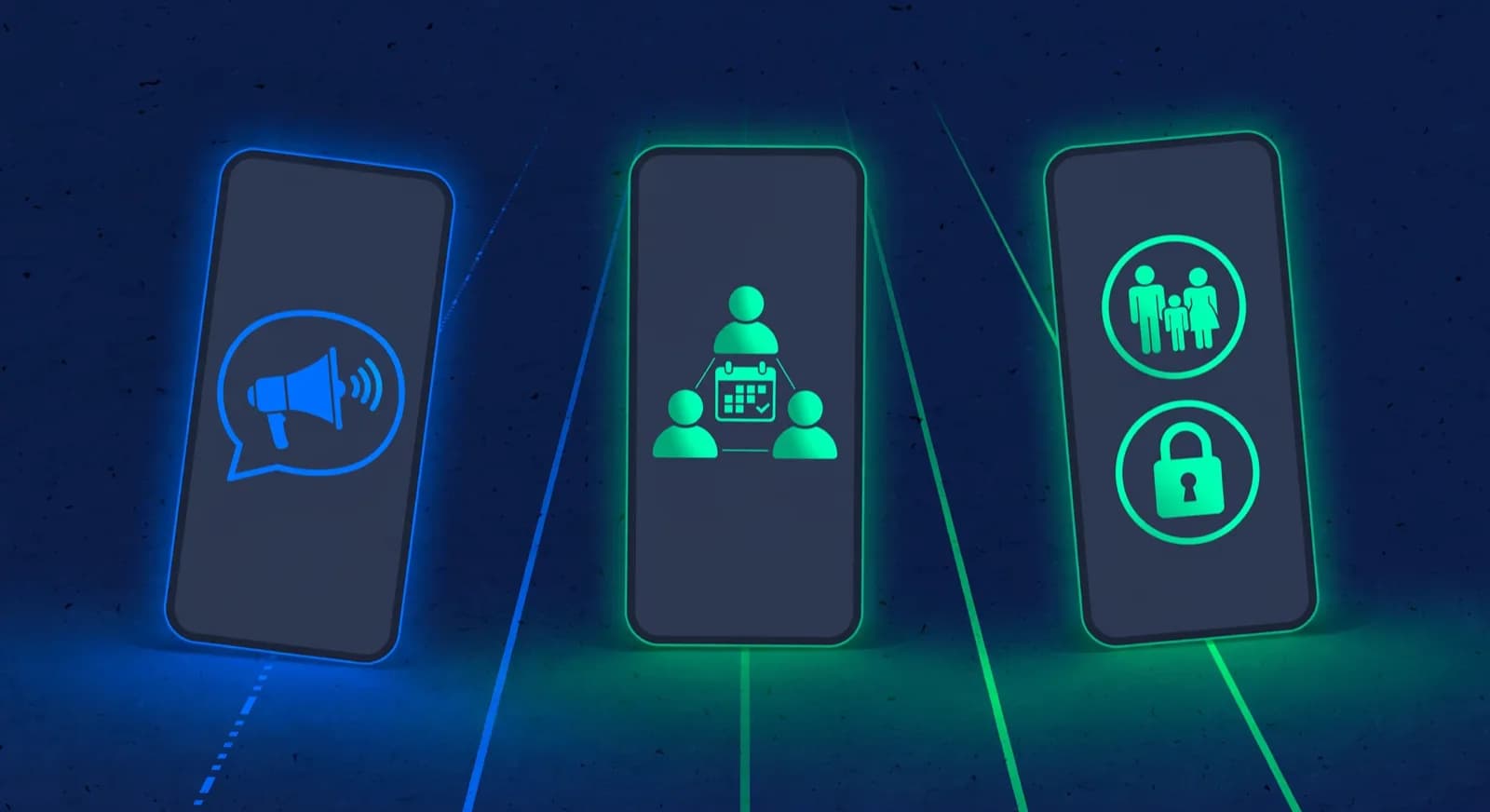
Organise academy WhatsApp messages into three channels: a broadcast list for academy-wide announcements, one group per batch for class logistics, and a direct thread per family for anything about an individual child. Tell parents where each kind of message belongs when they enrol. Keep fee reminders and progress discussions private, even when a group message would take less time to send.
| Channel | What goes here | What never goes here |
|---|---|---|
| Broadcast list | Holiday notices, academy-wide fee due dates, tournament registration deadlines, schedule changes affecting everyone | Anything about one child or one family |
| Batch group, one per batch | Class timing for that batch, homework for the batch, batch achievements celebrated collectively, parent car-pool coordination | Individual fees, individual critique, rating comparisons |
| 1:1 family thread | Progress updates, fee status and receipts, attendance or behaviour concerns, make-up class scheduling | Mass announcements that belong in broadcast |
Two mechanics matter when setting this up. A broadcast list delivers as a private message to each recipient, but only to contacts who have saved your academy number in their phones [2], so saving the number becomes step one of your admission checklist. And one group per batch is a rule, not a suggestion: a single all-academy group mixes beginners' parents with tournament parents, and every message becomes noise for most of its readers. WhatsApp, a service owned by Meta [3], is where many parents already are, but not every family uses it or checks it promptly, so ask each family at enrolment which channel it prefers and write that down.
This page is the operating manual for running the channel well, and it also covers the decision that sits above it: whether WhatsApp should be your only parent channel, or whether to add a guardian portal for the private records chat cannot hold. That decision, with a retrieval test and a one-batch pilot, is near the end of this guide.
Which tools send WhatsApp for chess academies?
Several academy tools send WhatsApp messages, and they differ in what they send and who reviews it. ChessCore, which we build, sends class reminders 24 hours and 2 hours before a class, and fee messages, as fixed templates once the academy turns them on, and only to families who opted in for that purpose and have not sent STOP. AI-drafted notes wait for a person to review and send them. Monthly progress reports do not go over WhatsApp: when an academy switches them on, they go to guardians by email with no AI text. WhatsApp sending needs a connected WhatsApp Business Cloud API number, and the triggers and consent rules are on the ChessCore WhatsApp integration page [6].
Other tools do similar jobs. Spirenex lists WhatsApp fee reminders, receipts, welcome messages and other academy alerts, with an option to connect your own WhatsApp Business API provider [7]. Wise's chess-schools page describes automated session reminders over WhatsApp and email using the academy's own WhatsApp Business account [8]. Both pages were checked on 16 October 2026. Choose around the messages you need to send, because lesson reminders, payment receipts and individual progress updates serve different purposes.
Keep the three-channel structure when you add software. Ask the provider who receives each message, which account sends it, and whether a coach can review an individual update before it reaches a family. Test a class reminder and a private progress message with your own staff first, and make sure a message about one child goes to that child's parent while timetable notices reach the relevant batch.
What rules keep a batch group useful?
Written rules, pinned in the group description on day one, keep a batch group useful. Groups tend to drift: first off-topic forwards, then festival graphics, then a parent asking about their own child in front of the other families. Rules posted at creation read as professionalism, and rules posted after the drift starts read as a reprimand. The block below is copy-ready, with fields in square brackets for you to fill in.
- This group is for [batch] logistics only: schedules, homework and class notices.
- Coaches post on class days. Questions sent outside [reply hours] are answered in the next window.
- Questions about your own child go to a direct message with the coach, never to the group.
- Fees are handled in your individual thread with the academy; no payment discussion in the group.
- No forwards, greeting graphics or off-topic links; the group should be readable in thirty seconds.
- Announcements do not need replies; a reaction is enough, and it keeps the group quiet.
- Concerns about academy policy go to [academy contact] directly, where they can be acted on.
- Admins may remove off-topic messages without comment; it is housekeeping, not censure.
Enforce gently and identically for everyone. The first time a parent asks an individual question in the group, answer the harmless part in one line and move the substance to their thread: happy to discuss, messaging you directly. Done visibly and kindly, it shows the whole group where the boundary is without a confrontation. Setting these norms is part of the broader operations playbook in our guide on how to run a chess academy. Two exceptions come up often enough to prepare for.
| Exception | What to post or say | What staff check next |
|---|---|---|
| A parent posts a fee dispute in the group | In the group: Thanks, [name]. I am messaging you directly about this so the group stays readable. In the private thread: I have seen your message about [month]. I am checking the invoice and the payment record, and I will write to you by [time and day]. | The invoice and its payment record (paid, part paid or unpaid), the date any reminder went out, and any note on a payment link or mandate. Do not discuss the amount in the group. |
| An urgent venue change needs acknowledgement | In the group: Venue change for [batch] on [date]: the class is now at [new venue], [map link], at the usual time. Please react or reply seen so we know you have this. If you cannot attend, message [academy contact]. | A list of families who reacted or replied. Contact the rest privately, in the channel each prefers, before [time], and confirm that the new venue is open and staffed. |
What should never be said in a group?
Three things should stay out of a batch group: an individual family's fee status, individual critique of a child, and comparisons of marks or ratings between students. Each one damages a different relationship, and an apology does not undo a message that every parent has already read. Treat them as hard lines rather than judgment calls, because in the moment each one feels efficient.
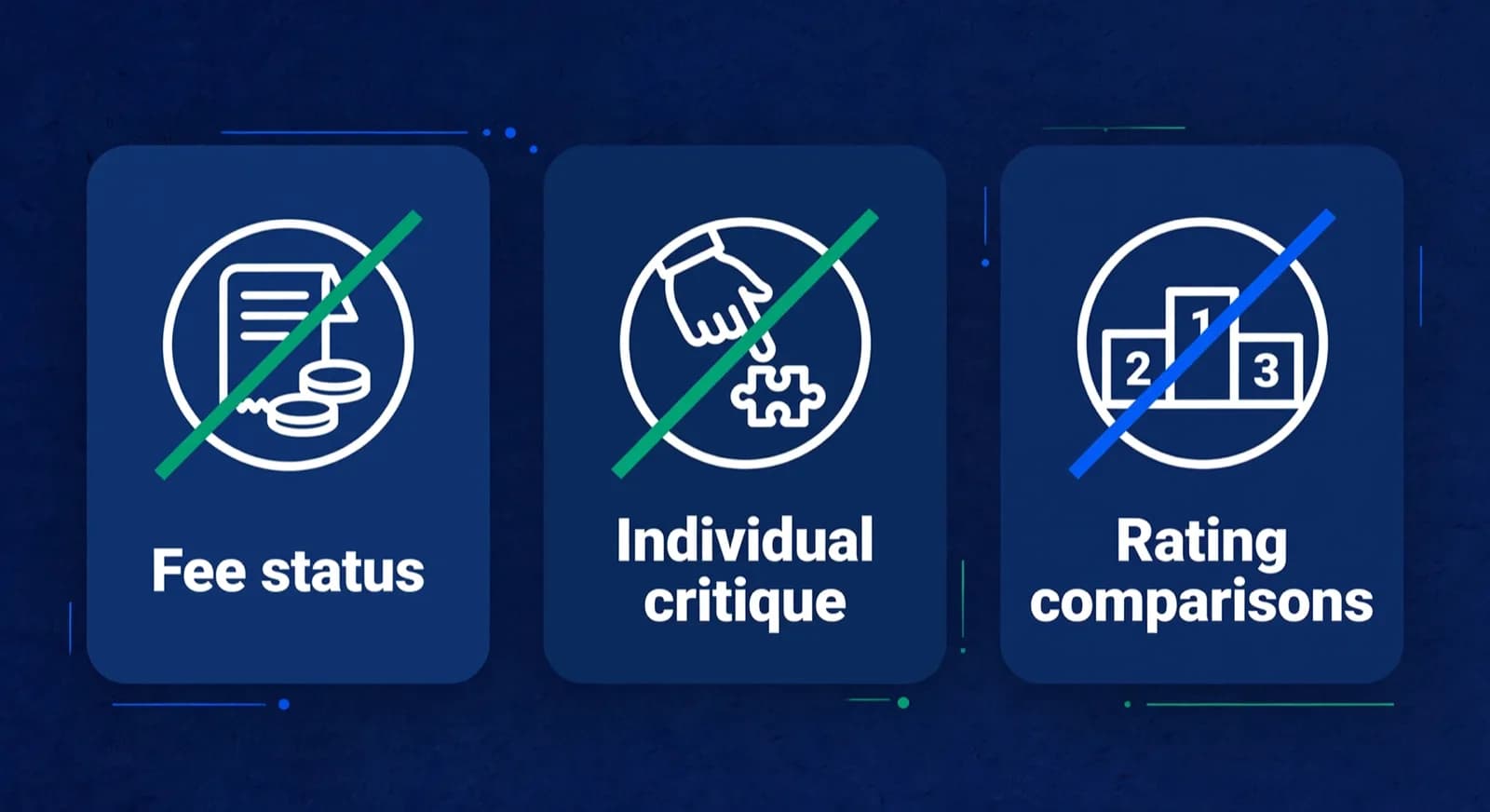
Fee status first. A message like the following parents have not paid for March, even without names, makes every parent in the group do the arithmetic about who is on the list. With names it is public shaming, and it puts the family it names in an awkward position whatever the outcome of the fee dispute. Fee conversations are private by default: the reminder, the negotiation if there is one, and the receipt all belong in the family's own thread. The structure of what you charge is a separate design question, covered in our piece on chess academy fee structure; the delivery channel for anything about money is always one to one.
Individual critique is the second hard line, and it includes the well-intentioned kind. Posting a position screenshot with look at this blunder from yesterday's round feels like a teaching moment, but if nineteen families can identify whose game it is, it is a child's worst moment published to their parents' peer group. The same goes for attendance call-outs and behaviour remarks. Critique is coaching, coaching is individual, and the group is a notice board, not a classroom. If a position is genuinely instructive for the whole batch, strip the player's name and the game date, then teach it in class where the lesson lands without an audience of parents.
Rating comparisons are the third, and the most tempting, because celebration slides into ranking so easily. Congratulating the whole batch on a tournament is healthy; posting a table of everyone's ratings, or praising one child's rating in front of the batch, creates a leaderboard that parents then maintain on their own. Comparisons between families can feed anxiety, and our guide to why students quit chess academies looks at the causes of dropout. Show each family their own child's trajectory in their own thread, with context.
Which WhatsApp Business features matter?
Four features of the free WhatsApp Business app earn their place in an academy's week: labels, quick replies, the business profile, and greeting and away messages [1]. None of them requires the paid platform or a developer; a solo operator can set all four up in an afternoon, and they compound daily after that.
Labels turn a chat list into a workable queue: tag family threads with their batch, mark fee-pending conversations, and flag trial students, so Monday morning starts with a filter instead of a scroll. Quick replies turn your ten most-typed messages, class timings, the academy address, the fee process, the make-up policy, into two-keystroke insertions, which matters most on days when the same schedule question arrives eight times. The business profile gives parents your address, hours, and website on the chat header itself, and greeting plus away messages set response expectations so a 10 pm question gets a polite automatic boundary instead of a 10 pm reply [1]. Broadcast lists, available in standard WhatsApp too, remain the announcement backbone described above [2].

Parent updates · this week
14 of 14 sentWeekly recap · Lucas M.
Lucas attended Thursday's class and won 2 arena games. His September report is in your portal.
Receipt · October fee
$180 received via card AutoPay. Receipt saved.
9:42 AMRecap approved by Coach Elena
Open the guardian portal
Own login · nothing to install
Should a chess academy use a WhatsApp Community instead of groups?
Use a WhatsApp Community when notices keep getting lost between your batch groups, because a Community puts one announcement group and the linked batch groups under one roof. Every Community member is in the announcement group and only admins can post there, and members see the member count while admins see who the members are [10]. That makes it the closest built-in option to a notice board that does not expose families to each other.
A broadcast list reaches only contacts who have saved your number [2], while a Community announcement group reaches every member who joined. The batch groups inside a Community still behave like ordinary groups, so the rules above still apply, and individual fees and progress still belong in the family thread. A Community is still chat: it scrolls away and cannot tell you who paid in March.
| Setup step | Broadcast list | Community announcement group |
|---|---|---|
| Who can post | Only you | Only admins |
| Who receives it | Contacts who saved the academy number | Every member who joined the Community |
| Can parents see other members | No, each copy arrives privately | Members see the count, admins see who the members are |
| Setup for a new family | Ask them to save the number, then add them to the list | Send the Community invite link, then add them to their batch group |
Neither a broadcast list nor a Community gives you what a record gives you, which is history you can query later. That gap, and when it justifies a guardian portal, is the subject of the final sections below.
How often should an academy message parents?
Often enough to be predictable, rarely enough to be read. A workable starting point is at most one batch-group message per class day, two to four broadcasts a month, and one substantial individual update per family per month. These counts are editorial suggestions, not research findings, so adjust them to what your families tell you. A muted channel can look like communication from the sender's side, so ask a few families which messages they actually read.

| Message type | Cadence | Channel |
|---|---|---|
| Class logistics and homework | As needed, batched into one message per class day | Batch group |
| Academy announcements | Two to four per month | Broadcast list |
| Individual progress update | Monthly, anchored to a progress report | 1:1 thread, or email for ChessCore's automatic monthly report |
| Fee reminder and receipt | Once per cycle, plus one follow-up if unpaid | 1:1 thread |
| Tournament and event recaps | One consolidated message after the event | Batch group |
The monthly individual update deserves its anchor: a real progress report, not a how is Mateo doing improvisation. A fixed format makes that sustainable at batch scale, and our chess progress report template gives you one to copy. How you present the rating line inside it, especially in a plateau month, is its own craft, covered in showing parents rating progress. The rest of the system around reports lives in the pillar guide to chess progress reports.
If you also use automatic reminders, count them. Take an illustrative four-week period with eight actual sessions. Two enabled class reminders per session, 24 hours and 2 hours before, make 8 x 2 = 16 scheduled reminder attempts for each family on WhatsApp, before any are skipped for missing consent or quiet hours. Optional group notices, fee messages and the monthly email report sit on top of that and are counted separately. This is a workload illustration, not delivery data, and it does not claim parents tolerate any particular number. A family with children in two batches sees the figure double, so check it per family before you switch reminders on.
What does India's DPDP law mean for academy WhatsApp groups?
India's Digital Personal Data Protection Rules, 2025 were notified in the Gazette of India on 13 November 2025 (G.S.R. 846(E)) and come into force in stages [11]. Rules 1, 2 and 17 to 21 took effect on publication, rule 4 takes effect one year after publication, and rules 3, 5 to 16, 22 and 23 take effect eighteen months after publication [11]. The later group includes the notice rule and rule 10, which requires a data fiduciary to adopt measures so that verifiable consent of a parent is obtained before it processes a child's personal data [11]. That eighteen-month date, in mid-May 2027, has not arrived as of 16 October 2026, so rule 10 is not yet in force. The Act's own provisions on children's data have a commencement notification of their own, which this guide has not reviewed, so confirm that date with a lawyer.
The rules also list classes and purposes exempt from the parental-consent and tracking restrictions. For educational institutions, the exemption covers tracking and behavioural monitoring for the institution's educational activities or the safety of enrolled children [11]. Whether a chess academy counts as an educational institution, and whether messaging a parent about a class falls inside that exemption, is a question for a lawyer, not for a WhatsApp setting.
Keep three things apart. What your software enforces today is one: a dated opt-in for each message purpose and a block after STOP, which you should check in the tool you use. What is prudent at enrolment is another: collect written consent that names each channel and purpose (batch logistics, fee reminders, progress updates), keep a dated copy with the student record, and remove a family from the batch group the same week they leave. The third is the legal duty that is not yet in force, which is rule 10 from about May 2027. Most of the children an academy messages about are minors, so a parent's phone number, a child's name in a batch group and a shared game screenshot are all personal data you should be able to show consent for.
When does WhatsApp alone stop working?
WhatsApp alone stops working when the academy needs records rather than messages. Chat is a delivery channel with no memory you can query. A parent who wants March's report scrolls for it, a new coach inheriting a batch inherits no history, and a receipt sent in April is hard to find by August. None of this is WhatsApp failing; it is WhatsApp being asked to be a database.
Fees show the gap first. A payment link dropped in chat is convenient, and gateways like Razorpay support recurring collection through subscriptions and UPI-based mandates, so the link can resolve to a recorded payment rather than a screenshot of a bank transfer [4]. UPI has made paying from a link or QR a common expectation in India [5]. The chat thread is still not a ledger, so keep who has paid, who is overdue and what was refunded in a structured record, with WhatsApp carrying the link and the receipt.
Fees · October · all batches
136 of 148 paidCollected · this term
92%Lucas M. · October · $180
Card AutoPay · receipt sent to Müller family
Mia G. · October · $180
Payment link opened in WhatsApp
Batch B2 · 12 of 14 paid
No bank-transfer screenshots needed
AutoPay mandates · 41 active
Renew monthly without reminders
The sections that follow decide whether to add a guardian portal for those records, with a retrieval test and a four-week pilot you can run on one batch. The rest of this series lives in the parent communication hub.
Should you add a guardian portal instead of WhatsApp?
Keep WhatsApp for notices and pilot a guardian portal when private records are repeatedly missing or hard to retrieve, for example when a coach hands a batch over and the earlier reports, invoices and notes cannot be found. There is no student count at which a portal becomes necessary. The trigger is an operational failure you can name, not a number on a roster.
| What you observe | Decision | Reason |
|---|---|---|
| A parent asks for last term's report or a receipt and staff cannot find it within a few minutes | Pilot a portal with one batch | The record exists in no place a family or a colleague can open without help. |
| A new coach takes over a batch and has no earlier notes or reports | Pilot a portal, and move the notes first | History kept in one person's chat leaves with that person. |
| Fee questions or complaints are being posted in a batch group | Move those messages to a private thread now; this does not need a portal | The problem is the audience, and a private thread fixes it. |
| Reports and invoices are already retrievable by staff and parents, and the complaint is noise or off-topic posts | Keep the setup and tighten the group rules above | A portal would not reduce noise; the group rules in this guide would. |
A portal and a group are not rivals; they do different jobs. A WhatsApp group is a shared room where one message reaches every member, so it suits anything that is the same for every family. A guardian portal is a private view of one family's own records, so it suits a report, an invoice or a coach note that belongs to one household. The split, not a winner, is the answer: group for notices, a private channel for records, with a portal as one way to provide that private channel.
What does a guardian portal add that a group cannot?
A guardian portal adds two things a group cannot: a view scoped to one household, and records organised per student rather than by the order messages arrived. Privacy comes first, access second. Both are about the group's audience, not about the technology, because a WhatsApp group is only as private as its member list.
Phone numbers are the first concrete test. Members of a regular group can usually see one another's numbers, which is one reason some parents decline a batch group. WhatsApp opened username reservations on 29 June 2026 and says the full rollout comes later in the year, so that exposure will ease over time but cannot be relied on for every family yet [12]. A portal gives a family access to its own child's records without handing every household every other family's number.
Access is the second. When a parent asks in October what the coach said about endgames in June, nobody should scroll four months of group history to find it. A report or invoice that sits on the student record can be opened by the family and by a colleague who was not in the room. In ChessCore, which we build, a guardian joins from an email invite that expires after 7 days, creates their own login and opens the portal in any browser with nothing to install. Monthly progress reports are a separate path: once the academy switches them on, they are emailed to guardians automatically with no AI text, and the portal is where a family opens reports later. AI-drafted notes still wait for a coach to approve them before they go. Check what retention any tool you use actually offers, because a promise of permanent history is not something a portal can make.
A portal does not remove support work; it moves it. Families miss the invite, forget a password or never open the link, and someone at the academy helps them, instead of searching old chats for a lost receipt. Plan for that in the pilot rather than assuming adoption.
How would a four-week portal pilot for one batch work?
Pilot with one batch and leave the WhatsApp group exactly where it is. Announcing that WhatsApp is being replaced is the mistake to avoid, because families hear that their easiest channel is going. The group keeps its job, and the pilot tests only whether a portal can take over the private records. This schedule is a suggested process, not adoption data from any academy.
- Week 1: choose one batch, invite its families by email, and help each family sign in, in person at pickup or by phone. Record who has signed in. The invite link expires after 7 days, so check at day 7 who has not and arrange the help they need.
- Week 2: publish a report you have already written for that batch, rather than writing a new one, and tell families in the group that it is waiting for them in the portal.
- Week 3: check invoice access. Ask a few families to open their latest invoice and receipt, and note every problem they hit.
- Week 4: review the unresolved access problems. If most families can open their report and invoice and the remaining problems have a fix, extend to the next batch. If not, fix the problems first or stop.
October progress report · Lucas M.
1 of 14 drafts for Batch B2
Lucas attended 4 of 5 classes this period and played 18 rated games, moving from 1310 to 1342.
His endgame conversion improved clearly. Next month the focus is back-rank defense, based on the mistakes tagged in his last three games.
Highlighted numbers come from your attendance and rating records. The AI cannot change them.
Goes to the Müller family after approval
Keep the pilot honest by judging it on the access problems you recorded, not on how many invitations you sent. A pilot that ends with several families still unable to sign in has found a real limit of your academy, and that is a useful result. Write the stopping rule down before week 1, such as several families still unable to sign in after two rounds of help, because a rule set after the pilot bends toward whatever result you wanted.
Run both channels without confusing anyone by stating the split in one sentence and following it yourself: the group is for news that is the same for everyone, and the portal or a private thread is for news about your child. Parents are not confused by two channels; they are confused by two channels with overlapping jobs.
Frequently asked questions
What rules should a WhatsApp group for coaching classes have?
Pin rules at creation: the group is for batch logistics only, individual questions go to direct messages, no fee talk in the group, no forwards or off-topic links, replies to announcements are optional, and admins may remove off-topic posts. Add a posting window for coaches so parents know when to expect answers. Rules posted on day one read as professionalism; rules added after drift read as reprimand.
Is WhatsApp Business worth it for a chess academy?
Yes, and it is free. The WhatsApp Business app adds labels for sorting family threads by batch and fee status, quick replies for your most-typed answers, a business profile with address and hours, and greeting and away messages that set response expectations. A solo academy operator can configure all of it in an afternoon, and no developer or paid API is required for any of these features.
Should fees be discussed in the batch WhatsApp group?
Never. Individual fee status in a group is public shaming with names and uncomfortable arithmetic without them, and the family concerned is put in an awkward position either way. Send academy-wide due dates by broadcast, then handle every reminder, negotiation, payment link, and receipt in the family's individual thread. Money is a sensitive subject, and a private thread keeps it between you and the family.
How many WhatsApp groups should a chess academy run?
One group per batch, plus a broadcast list for academy-wide announcements, and no all-academy group. A single combined group mixes beginner and tournament families so every message is irrelevant to most readers, which is a common reason families mute a group. Batch-level groups keep every message relevant to everyone in it, and the broadcast list covers the genuinely universal notices.
Can parents pay chess academy fees through WhatsApp?
Parents can pay through a payment link shared in their WhatsApp thread. Gateways such as Razorpay support one-time links and recurring collection through subscriptions with UPI-based mandates, so the payment is recorded against the family rather than arriving as a bank-transfer screenshot. Keep the ledger in a structured system, and use the chat only to deliver the link and the receipt.
Do I need parental consent before adding families to a WhatsApp group?
Get written consent at enrolment as good practice, naming each channel and purpose and what other group members can see. India's DPDP Rules require verifiable parental consent for processing a child's personal data under rule 10, but that rule is not yet in force and comes eighteen months after the November 2025 notification [11]. Confidential Dispatch's explainer dated 18 July 2026 advises keeping individual marks, attendance issues and photos out of groups visible to other parents [9]. Confirm your own obligations with a lawyer.
Sources
- [1]WhatsApp Business official site · accessed 2026-06-10
- [2]WhatsApp Help Center · accessed 2026-06-10
- [3]WhatsApp, Wikipedia · accessed 2026-06-10
- [4]Razorpay Subscriptions documentation · accessed 2026-06-10
- [5]Unified Payments Interface, Wikipedia · accessed 2026-06-10
- [6]ChessCore WhatsApp updates for chess academies · accessed 2026-10-16
- [7]Spirenex features: attendance, fees, WhatsApp · accessed 2026-10-16
- [8]Wise LMS for chess schools · accessed 2026-10-16
- [9]Coaching classes, WhatsApp groups and parental consent · accessed 2026-10-02
- [10]About community announcements (WhatsApp Help Center) · accessed 2026-10-16
- [11]Digital Personal Data Protection Rules, 2025 (Gazette of India, G.S.R. 846(E), 13 November 2025), Ministry of Electronics and Information Technology · accessed 2026-10-16
- [12]WhatsApp now lets you reserve usernames (TechCrunch, 29 June 2026) · accessed 2026-10-16
Written by Abhishek Tiwari
ChessCore
Drafted with AI, fact-checked and approved by a human before publishing, the same guardrail our product applies to every report it sends. Read our editorial standards.
Keep WhatsApp, add the system of record
See how approved AI drafts, automatic reminders and receipts reach each family while attendance, fees and reports stay queryable behind them.
- Roster import from the spreadsheets you already keep
- Lichess and Chess.com connections, batches, and fee plans
- First reports in week one, after your approval
- Free plan, no credit card required