On this page10 sections, 23 min read
- How do you teach a child chess at home?
- Should I start with pawn-only games?
- How do you teach chess to a 6 year old?
- What order should a young child learn chess ideas in?
- What do you need to start chess at home?
- Which free chess apps and sites are best for kids at home?
- How much chess should a child practise at home?
- How do you play chess with your child at home without it turning into a fight?
- When should you get a chess coach or class?
- How do you keep track of your child's chess progress at home?
- Frequently asked questions
Bottom line
To teach a child chess at home, start with pawn-only games, add one piece at a time in the order rook, bishop, queen, knight, then king and mate, and keep sessions for young children to ten to twenty minutes. Do not fake losses; use an honest handicap so the child can win a real game [6]. Free apps such as ChessKid or Lichess can fill the gaps between sessions.
TL;DR
- Start with the Pawn Game (sixteen pawns only), then add rook, bishop, queen, knight, and finally king and mate, one new piece per stage over four to eight weeks, with sessions of ten to twenty minutes for young children [6]. A UK charity, Chess in Schools and Communities, teaches the same pawn-first, piece-by-piece order [8].
- Free tools are enough to start: ChessKid, Lichess, and Chess.com all offer puzzles and gentle practice suited to children, at no cost.
- Ten to twenty focused minutes a few times a week is a good starting routine, with shorter sessions when your child loses interest.
- Do not fake full-strength losses; handicap openly so the child can win a real game, and change the odds when the game stops being interesting for both of you [6].
- Bring in a class or coach only when your child starts asking to improve and you have run out of things to show them yourself.
Key facts
- GM Mauricio Flores Rios recommends teaching children with pawn-only games first, then adding rook, bishop, queen, knight, and finally king and mate, one piece per stage over four to eight weeks, in sessions of ten to twenty minutes.[6]
- Chess in Schools and Communities, a UK charity, teaches beginners with a series of mini-games that introduce each piece in turn, starting with the pawn, on the principle that children learn chess best by playing.[8]
- Each Lichess puzzle is one position with one task, so a child can stop after any puzzle instead of abandoning a half-played game.[2]
- Chess.com and Lichess both let players play and practise for free, so a family needs no paid subscription to give a child a place to play online.[3]
- Online platforms attach a rating to each account that updates after every rated game, so a child who plays online soon has a number to follow.[4]
How do you teach a child chess at home?
To teach a child chess at home, start with pawn-only games, add rook, bishop, queen and knight in that order, then introduce the king and checkmate. GM Mauricio Flores Rios recommends this sequence and sessions of ten to twenty minutes for young children [6]. His approach gives a beginner a playable game from the first day, with new rules arriving as the child needs them. Between sessions, use ChessKid or Lichess for a few puzzles. Keep returning to the board together so your child has someone to ask, challenge and celebrate with.
At home, you can support chess by building a routine, choosing a practice tool and making time to play together. Structured teaching adds a sequence of ideas and feedback on the child's games; the section on teaching a 6 year old below sets out a first session minute by minute. You do not need to be a strong player to support that work. Ask the child to show you a move they learned, play a short game and let them explain their plan. Patience and a willingness to lose cheerfully give you a useful role alongside a coach or class.
If you are not sure your child is ready yet, our guide on what age to start chess covers the readiness signs to look for, and the pillar on the benefits of chess for kids sets out what the game can and cannot do for a child. Assuming your child is keen, the home routine below suits children of about five to ten, whether they are learning the pieces or already playing full games; for an older beginner, our guide on how to teach chess to beginners is the better fit.
Should I start with pawn-only games?
Yes. In the Pawn Game, place the sixteen pawns on their normal starting squares and use normal pawn moves and captures. A player wins by reaching the far side with a pawn or capturing all the opponent's pawns [6]. You can play a complete contest before teaching the other pieces, and your child can practise moving, capturing and planning with one piece type. Ask them to explain a move they liked after the game. Add another piece when they can use the pawns with confidence, rather than after a fixed number of days.
When the child starts winning through actual ideas, trading correctly or creating a breakthrough, add one piece at a time in this order. First, pawns plus rooks, until the child both uses rooks and defends against them. Second, bishops, giving diagonals their own stage. Third, the queen, whose movement is then easy to explain. Fourth, knights, taught late on purpose because the L-shaped jump is the hardest movement for young children. Last, the king, check, and checkmate; add castling and en passant only after the rest is automatic.
- Pawn Game: sixteen pawns only; win by promoting or capturing all.
- Add rooks, then bishops, then the queen, then knights.
- Add king, check, and mate last; delay castling and en passant.
- Keep young sessions to ten to twenty minutes, ending while they still want more.
- Do not fake a full-strength loss; handicap openly and shrink the odds as they improve.
How do you teach chess to a 6 year old?
To teach chess to a 6 year old, keep the pawns-first order and shrink every step: one new piece per stage, kept until the child uses it well, one goal per mini-game, and a stop after ten to twenty minutes. A six year old cannot hold the whole board in mind, so a position with one piece type and one target gives them something they can win in the first minute. That early win is what brings them back to the board the next day.
| Minutes | What happens | What you need |
|---|---|---|
| 0 to 2 | Name the piece of the day, the pawn, and show its step forward and its diagonal capture a few times | A board and the sixteen pawns, nothing else |
| 2 to 8 | Pawn race: three pawns each on open files, and the first pawn to reach the far side wins | Three pawns per side |
| 8 to 13 | The full Pawn Game: a pawn reaching the far side or capturing every enemy pawn wins | All sixteen pawns |
| 13 to 15 | Recap: the child shows you how a pawn moves and captures without a prompt, then you stop on a good note | Nothing extra |
Treat the minutes as an example, not a timetable to enforce. If the child starts wriggling or pushing pawns at random by minute eight, skip to the recap and finish. A short session that ends happily does more for a six year old than a full one that ends in tears, and the next session can pick up exactly where this one stopped.
The table above uses "three pawns each on open files". Here are three exact starting positions you can set up, written with board coordinates (files a to h from left to right, ranks 1 to 8 from White's side). The rules for all three: pawns move and capture as in chess, including the two-square first move (FIDE Laws, Article 3.7 [9]); en passant is left out until the rest is automatic [6]; a pawn that reaches the far side wins, as does capturing every enemy pawn [6]; and if the player to move has no legal pawn move, the game is a draw. That last rule is a house rule borrowed from stalemate in Article 5.2.1 [9], which applies to a player with no legal move whose king is not in check. The positions are illustrative teaching setups, not published exercises.
| Setup | Squares | What happens | What to ask the child |
|---|---|---|---|
| Pure race | White pawns on a2, b2, c2; Black pawns on f7, g7, h7 | The pawns never meet. Each side needs five moves with one pawn (one two-square step, then four single steps), so whoever moves first arrives first and wins | Why did the player who started win, and how could the other side have slowed them down? |
| Head-on pawns | White pawns on a2, b2, c2; Black pawns on a7, b7, c7 | Pawns that face each other block each other. A full search of every line under the rules above shows that careful play from both sides ends with nobody able to move, a draw | Which pawn can never move forward? Is there a capture that helps? |
| Dead end | White pawn on e4; Black pawn on e5 | Neither pawn can move or capture, so the player to move has no legal pawn move and the game is drawn under the house rule | Can you find a way to free a blocked pawn? Why does this never happen when pieces are on the board? |
If the pure race is lopsided, let the child take the first move. That is not a fake loss. It is the only thing that decides that setup, and it teaches counting moves. Have a confident club player or coach look over any position before you teach it, because small changes to the setup can change who wins.
Give each piece a nickname and a small story, because a six year old remembers a character long after a rule. The pawns are soldiers who march forward but capture with a sideways step, the rook is a castle tower that slides in straight lines, the bishop keeps to its own colour of path, and the knight is a horse that jumps the fence. The stories fade on their own as the child grows, and the real moves are already learned underneath them.
- Pawn race: a few pawns each, first to promote wins, which drills pawn movement without any theory.
- Capture game: scatter a few targets and clear them all with the new piece to learn how it moves.
- Treasure hunt: put coins or stickers on squares and reach them with the piece they are learning.
- Colour game: touch every square of one colour with a bishop to fix the diagonal idea.
- King walk: march a lone king across the board while a rook tries to cut it off, once the king has been introduced.
What order should a young child learn chess ideas in?
A young child should learn chess ideas one piece at a time, in the order the mini-games follow: pawns first, then rooks, bishops, the queen, and knights last, and only then the king with check and checkmate, before whole games. Chess in Schools and Communities, a UK charity, teaches beginners with the same pawn-first run of mini-games, one piece at a time [8]. Each stage rests on the one before, and spending four to eight weeks moving through the pieces is normal for a five or six year old, not a sign of slow progress.
| Stage | What the child can do | Leave for later |
|---|---|---|
| Pawns (the Pawn Game) | Move and capture with pawns and win a pawn-only game | The other pieces and whole games |
| Rooks, then bishops | Use straight-line and diagonal pieces and defend against them | The queen and knights |
| The queen | Combine the rook and bishop moves in one piece | The knight's jump |
| Knights | Make the L-shaped jump, taught late because it is the hardest | Check and whole games |
| King, check and mate | Keep a king safe, give check, and finish a guided checkmate | Castling, en passant, openings and long plans |
Show the full starting position as one of the last steps, not on day one. Chess.com's beginner page gives the setup simply: each player has a light square in the bottom right corner, the second rank is filled with pawns, rooks go in the corners with the knights and then the bishops beside them, the queen goes on her own colour, and the king takes the remaining square [7]. Let the child build it from memory a few times while you watch; getting it right alone is a small win of its own.
Progress at six rarely shows up as a rating, because most children this age are not playing rated games yet. Look instead for a child who moves every piece correctly without prompting, sets up the board alone, notices when a piece is about to be taken, and asks for one more game. A line or two in a notebook after each session, which pieces are secure and which game they liked, keeps you from re-teaching what they already know.
What do you need to start chess at home?
You need almost nothing to start chess at home: one physical board and set, one adult willing to play, and, optionally, a free app for puzzles. That is the entire starting kit, and none of it has to be expensive. A basic plastic tournament set costs very little and lasts for years, and a real board a child can touch beats a screen for a young beginner learning how the pieces move.
- A physical board and pieces: a simple weighted set is ideal, and a roll-up vinyl board is cheap and hard to break.
- One willing adult or older sibling to play against, which matters more than any piece of equipment.
- A free app or website for puzzles and gentle practice between games, such as ChessKid, Lichess, or Chess.com.
- A small, predictable slot of time: a few short sessions a week beats one long one, and a fixed rhythm makes it a habit.
- Patience and a light touch: no scorekeeping pressure, no long lectures, and no treating a lost game as a problem to fix.
Notice what is not on that list: a coach, a paid subscription, a chess clock, or opening books. Those come much later, if at all. At the start the single most valuable resource is your own attention, because a child who plays a real game with a parent who is genuinely engaged learns faster and stays keener than a child left alone with the best app in the world. Screens are a useful supplement at this stage, never the main event.
Which free chess apps and sites are best for kids at home?
Three free options cover most home needs: ChessKid, Lichess and Chess.com. ChessKid is built for children, with no chat, auto-generated usernames and activity reports for parents, and a paid Gold plan for unlimited puzzles and lessons [1]. Lichess describes itself as free with no ads [10], and its puzzle trainer serves one position at a time, so a child can solve two or three and stop [2]. Chess.com offers free play and practice alongside paid extras [3].
| Tool | Best for | Cost | What to check at home |
|---|---|---|---|
| ChessKid | Young beginners, ages 5 to 10 | Free tier, paid Gold plan | No chat, auto-generated usernames, child activity reports [1] |
| Lichess | Puzzles and casual games | Free, no ads [10] | Bite-sized puzzles and free study boards [2][5]; set up the account with a parent |
| Chess.com | Older kids who want to play online | Free play, paid extras | Large player base and free practice [3] |
| A physical board | Every age, especially the youngest | One-off, low cost | Hands-on and screen-free, best for learning how pieces move |
Pair a physical board for shared games with one app for puzzles between sessions. For the choice between platforms, read ChessKid versus Lichess for children, or ChessKid versus Chess.com for children if those are your two candidates. Our review of ChessKid for parents explains the free tier. Whichever app you pick, stay close enough to answer questions and notice frustration, and keep playing in person too.
How much chess should a child practise at home?
Start with ten to twenty focused minutes a few times a week, which is the range the GM behind the ChessMind guide recommends for children under eight [6], then adjust to your child's interest. Try a short game together or a handful of puzzles, and stop before attention runs out. A child who asks for another game is telling you the length suits them. If they keep looking away or rushing moves, finish sooner next time. You do not need to make up a missed session with a long weekend lesson.
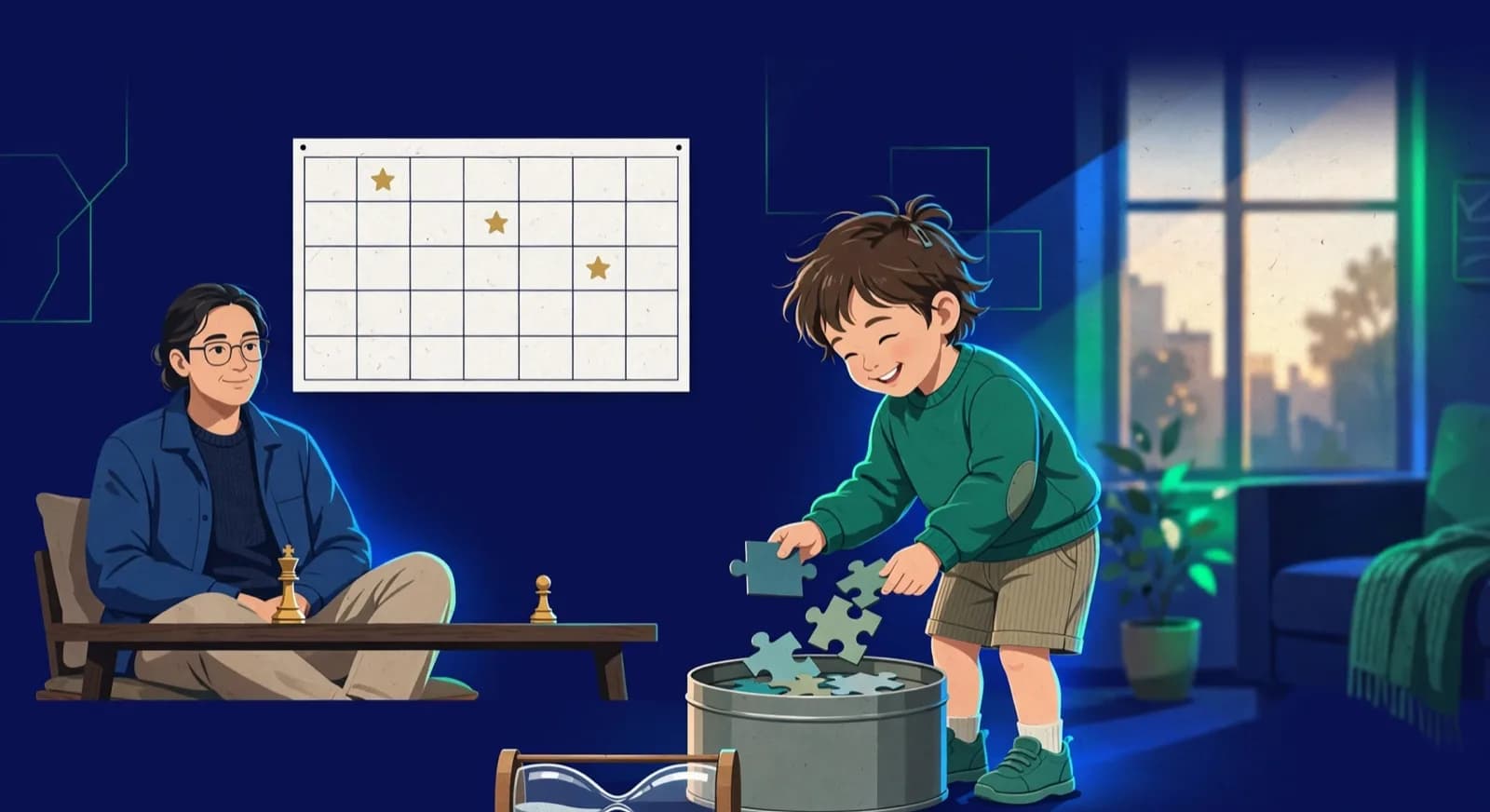
- Pick two or three short slots a week and keep them roughly consistent, so chess becomes a small habit rather than a special event.
- Mix the format: one game together, a handful of puzzles on an app, or a quick tactic you show them, so no single thing gets stale.
- Stop while they are still enjoying it, ideally before they ask to stop, so the last memory of the session is a good one.
- Follow the child's energy: if they want a second game, play it, and if they are done after five minutes, let them be done.
- Skip a session without guilt when life is busy, because a broken week matters far less than the game feeling like a chore.
Puzzles are the highest-value solo activity because each one is a small, self-contained task with a clear answer, which suits a young attention span better than a forty-move game [2]. A few puzzles a day, treated as a quick game rather than homework, quietly build the pattern recognition that makes their real games better. There is no need to track streaks or set targets. The goal at home is a steady, low-pressure trickle of chess, not a training programme.
How do you play chess with your child at home without it turning into a fight?
You keep chess at home peaceful by agreeing the rules before the game, stopping when your child wants to stop, and adjusting the odds when a game stops being fun for both of you. This is the part parents find hardest, because a game has a winner and a loser and young children can take losing badly. Below are three exact scripts for the moments that cause most arguments. They are things to try, not techniques that any study has tested, and each one ends with what you do next.
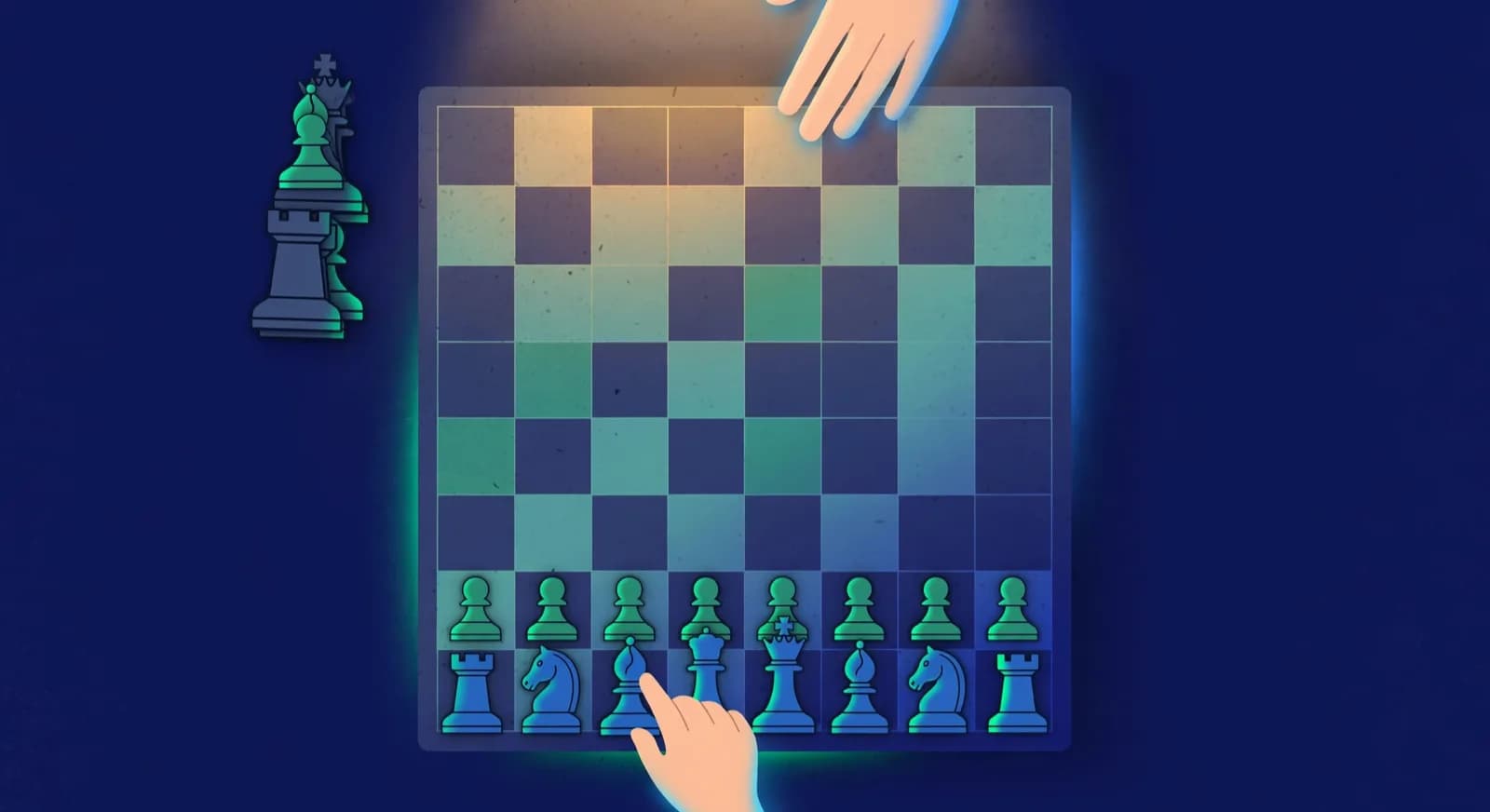
| Moment | What to say | Your next action |
|---|---|---|
| Before play: take-backs | "Before we start: each of us can take one move back if we say so before the other person moves. Is that fair?" | Play. When your child leaves a piece hanging, ask "Want a take-back?" rather than correcting them. Use your own take-back out loud once, so it feels normal. In casual games take-backs are a teaching tool; touch-move belongs to tournaments [6]. |
| Your child wants to leave | "Okay. Let us finish this move and put the pieces away. We can pick it up tomorrow." | Stop straight away, with no "just one more". Note the position in the notebook if you want to return to it, and start the next session with a mini-game they already win. |
| The game is too easy or too hard | "Let us change the odds. This game I will play without my rook." | Handicap openly, play one game, then look at how the game felt. Change the odds by one step, as described below. |
On odds, take a rook off your side first. It is a clear handicap and the child still faces a full-looking board. The step beyond that is removing your queen as well, or instead, which is a much bigger gift because the queen is your strongest piece. Let the game decide the next step. If the child studies the board, makes plans and asks for another game, keep the odds where they are. If the game ends in a few quick moves either way, or the child stops thinking and pushes pieces, move one step: put a rook back, or take off the queen. Do not fake a full-strength loss, because children detect charity [6]. The GM behind the ChessMind guide suggests a target of roughly one win in three for the child. That is one coach's rule of thumb, not a research finding or a developmental standard [6].
Next, model losing well, because your child copies how you react far more than what you say. When you lose the handicapped game, say so cheerfully, congratulate a good move, and reset the pieces to play again. When they lose, keep it small: name one thing they did well, avoid a post-mortem of every mistake, and offer another game rather than a lecture. A child who sees that losing is normal, survivable, and quickly followed by another go learns resilience, which is one of the quiet gifts chess gives children. A child who learns that losing brings a lecture learns to avoid the board.
Finally, resist coaching mid-game. The strongest temptation for a parent is to point out the hanging piece, take back the blunder, or explain the better move, and doing it constantly turns a game into an interrogation. Let mistakes happen. If you want to teach something, do it lightly and after the game, or better, ask a question rather than give an answer: what do you think happened to your knight there? One gentle question a child can answer themselves teaches more than five corrections they did not ask for. Save the systematic teaching for a class or an app, and let the games you play together be, mostly, just games.
When should you get a chess coach or class?
Get a coach or class when your child starts asking to get properly better and you have run out of things to show them at home. That moment usually arrives once a child plays full games happily, does puzzles for fun, and starts caring about winning against real opponents. What a class gives that home games rarely do is a planned order of topics, a coach who reviews the child's own games, and a room of opponents close to their strength.
There is no rush, and there is no need to hire a coach for a child who is still happily learning the pieces. The home routine is enough for the early stage, and pushing a reluctant child into formal lessons is the fastest way to make chess feel like an obligation. Wait for the pull to come from them. When it does, our guide on how to choose a chess class for your child lists the signs of a good beginner class and what to ask the academy first, and the wider teaching chess hub collects lesson plans and structured sequences if you want to keep going yourself for a while longer. If your child is neurodivergent, our piece on whether chess is good for children with ADHD is worth a read on how the game can suit them and what to watch for.
How do you keep track of your child's chess progress at home?
You can keep track of a child's chess progress at home lightly, without a spreadsheet: watch whether they keep choosing to play, whether fewer of their moves are random, and whether they can explain a move. Early improvement comes in bursts and plateaus. A rating is optional, and a rise in rating is not the test of whether home chess is going well.

Lucas M.
Batch B2 · Thursdays · joined Aug 2025
1342
Academy rating · Lichess games synced
Won vs. 1410 · French Defense
Best gameMissed fork on move 23
Homework setIf your child plays rated games online, read the rating as a trend across a month, never as a verdict on one game [4]. It can rise, flatten or dip while a child is learning. Watch for concrete changes as well: fewer pieces left undefended, more thoughtful captures, a plan your child can explain. If your child joins a class, ask the coach which skills they are working on and how home practice can support them.
A notebook by the board is enough. Each session takes one line: the piece or mini-game you practised, one move the child explained in their own words, and whether they wanted to come back. The example below is illustrative, not a real child's record.
| Day | Practised | A move the child explained | Wanted to return? |
|---|---|---|---|
| Tuesday | Pawn race, three pawns each | Said the middle pawn goes first so yours cannot capture it | Yes, asked for a second race |
| Thursday | Pawns plus one rook each | Explained why a rook behind its own pawn was safe | Stopped after ten minutes, asked to play tomorrow |
| Saturday | Pawn game, parent without a rook | Could not say why a pawn was lost | Asked to do puzzles instead |
Read the notebook for patterns, not scores. The Saturday line is useful: the child could not explain a loss and wanted a different activity, so the next session starts with a mini-game they win. The notebook records what the child did and whether they enjoyed it. It is not a training plan and it does not need a rating column.
The other half of keeping track, once a child is in a class, is communication, because at these ages a parent is often not in the room during lessons. Ask the class for a short written note every few weeks on what your child covered and how they are getting on. It says more than any one game.
Parent updates · this week
14 of 14 sentWeekly recap · Lucas M.
Lucas attended Thursday's class and won 2 arena games. His September report is in your portal.
Receipt · October fee
$180 received via card AutoPay. Receipt saved.
9:42 AMRecap approved by Coach Elena
Open the guardian portal
Own login · nothing to install
Frequently asked questions
How do I teach my child chess at home?
Start with pawn-only games, add one piece at a time in the order rook, bishop, queen, knight, then king and mate, and keep sessions for young children to ten to twenty minutes. Play those mini-games on a physical board, then use a free app such as ChessKid or Lichess for a few puzzles between sessions. Do not fake losses; use an honest handicap so the child can win a real game. The home job is the sequence and the habit, not a lecture on every rule at once.
What are the best chess apps for kids at home?
The best free chess sites for kids at home are ChessKid, Lichess and Chess.com. ChessKid is built for children, with no chat, auto-generated usernames and activity reports for parents, and it sells a paid Gold plan. Lichess describes itself as free with no ads and offers bite-sized puzzle training. Chess.com offers free play and practice alongside paid extras. A physical board for playing together beats any screen for the youngest beginners learning how the pieces move.
How much should a child practise chess at home?
Ten to twenty focused minutes a few times a week is a good starting point for young children, then adjust to your child's attention and interest. Mix a game together with a few puzzles on an app, and stop while they still want another turn. If they rush moves or become frustrated, shorten the next session. Skip a session without guilt when family life is busy; you do not need to compensate with a long lesson at the weekend.
Should I let my child win at chess?
Do not throw games obviously, because children notice and it feels patronising. Handicap yourself openly instead: start without a rook, and take your queen off as well if the game is still too easy. Change the odds by one step depending on whether the game stays interesting for both of you. The GM behind the ChessMind guide suggests the child wins roughly one game in three, which is one coach's rule of thumb, not research. That keeps winning and losing meaningful.
When should my child get a chess coach instead of practising at home?
Get a coach or class when your child starts asking to get properly better and you have run out of things to show them at home. That usually arrives once they play full games happily, do puzzles for fun, and care about winning against real opponents. A class adds a sensible sequence of ideas, honest feedback on their games, and classmates near their own strength, none of which home games supply. There is no rush, and pushing a reluctant child into formal lessons early is the fastest way to make chess feel like an obligation, so wait for the pull to come from them.
How do I teach chess to a 6 year old?
Start with the Pawn Game, sixteen pawns only, then add rooks, bishops, the queen, knights and finally the king and checkmate, giving each piece its own stage and moving on only when the child uses it well; expect the whole sequence to take four to eight weeks at two or three short sessions a week. Keep each session to ten to twenty minutes, turn every new piece into a small game such as a pawn race or a treasure hunt, and stop while the child still wants more. Do not lose on purpose at full strength; give yourself an announced handicap so the child can win a real game, and shrink it as they improve.
Sources
- [1]ChessKid: chess for kids · accessed 2026-10-16
- [2]Lichess Training: free chess puzzles · accessed 2026-06-29
- [3]Chess.com · accessed 2026-06-29
- [4]Elo rating system · accessed 2026-06-29
- [5]Lichess Study: free shared analysis boards · accessed 2026-06-29
- [6]How to Teach a Child Chess, ChessMind AI (GM Mauricio Flores Rios) · accessed 2026-10-16
- [7]How to Play Chess, Chess.com (board setup and piece movement) · accessed 2026-10-16
- [8]Chess at Home, Chess in Schools and Communities (UK charity) · accessed 2026-10-16
- [9]FIDE Laws of Chess, in force from 1 January 2023 (Article 3.7 pawn moves, Article 5.2.1 stalemate) · accessed 2026-10-16
- [10]About lichess.org (free, no ads, open source) · accessed 2026-10-16
Written by Abhishek Tiwari
ChessCore
Drafted with AI, fact-checked and approved by a human before publishing, the same guardrail our product applies to every report it sends. Read our editorial standards.
See how a class keeps parents in the loop
When your child is ready for a coach, see how ChessCore keeps attendance, rating history, and honest parent updates in one place, so families always know the chess is working.
- Roster import from the spreadsheets you already keep
- Lichess and Chess.com connections, batches, and fee plans
- First reports in week one, after your approval
- Free plan, no credit card required