On this page8 sections, 16 min read
- Is chess good for kids with ADHD?
- What do published studies say about chess and ADHD?
- Does chess help a child with ADHD build focus?
- Where does chess get hard for a child with ADHD?
- How do you introduce chess to a child with ADHD?
- How do you tell whether chess is working for your child?
- How do you brief a coach, and what should you hear back?
- Can chess replace ADHD medication or therapy?
- Frequently asked questions
Bottom line
Chess can be an enjoyable hobby for a child with ADHD, and the game asks a player to pause, scan the board and choose a move. Research does not show that chess treats ADHD: the best-controlled trial found no improvement in its main measure of executive function. Treat chess as a hobby beside professional care, never in place of it.
TL;DR
- Chess can be an enjoyable, low-pressure hobby for a child with ADHD, and playing it asks for pausing, scanning the board and choosing a move.
- Studies are few and small: an open-label pilot with no control group, a 105-person randomised trial that did not improve its main executive-function measure, and a 30-child comparison with no effect sizes in its English abstract.
- Practising attention inside a game is not the same as a demonstrated change in daily life, and none of these studies shows that ordinary chess lessons treat ADHD.
- Long games, waiting for an opponent and losing can be hard, so short sessions, a break signal and gentle framing matter more than ambition.
- Judge chess by whether your child enjoys it and can take part, drop it without guilt if it adds stress, and keep medication and therapy decisions with the treating professional.
Key facts
- A randomised trial of 105 patients aged 12 to 22 with ADHD who were stable on medication compared a chess-based serious game, Therapeutic Chess and a no-intervention control over 12 weekly sessions. It did not improve its primary measure, the parent-rated BRIEF-2 executive-function score.[8]
- In that trial the Therapeutic Chess group improved on secondary measures of emotional control, emotional regulation and inattention, and the authors call for larger studies to confirm these preliminary findings.[8]
- An open-label pilot by Blasco-Fontecilla and colleagues gave an 11-week chess programme to 44 children aged 6 to 17 with ADHD and reported parent-rated improvements, while warning the results need better-designed, controlled studies.[5]
- The NICE guideline NG87 sets out how ADHD is diagnosed and managed, including medication and support. It does not assess chess, which is why chess belongs beside professional care rather than in place of it.[7]
- Lichess offers free tactics training that presents one puzzle at a time with immediate right-or-wrong feedback, so a child can stop after any puzzle.[1]
Is chess good for kids with ADHD?
Chess can be a good hobby for some kids with ADHD, but it depends on the child, and research does not show that it treats ADHD. What chess offers is a structured, enjoyable game that asks a player to pause, scan the board and choose a move. It is not a treatment, and no responsible coach or parent should present it as one.
It helps to separate what chess asks of a child from what research has shown it changes. Chess gives a game with fixed rules, clear turns and quick feedback, and it asks for looking before leaping, holding a plan for a few moves and sitting with a hard position, which many children with ADHD find effortful in daily life. Practising those things inside a game is different from a demonstrated change outside it. Chess has not been shown to rewire attention, replace medication or guarantee better grades. If your interest is the wider case for the game, our honest parent's guide to the benefits of chess for kids covers the general evidence, and this post narrows to ADHD.
What do published studies say about chess and ADHD?
Published studies on chess and ADHD are few and small, and none shows that chess is a treatment. The three papers below differ in design, ages and what they measured, so the table sets them side by side. Treat the open-label pilot as the weakest evidence and the randomised trial as the strongest, and note that the randomised trial did not improve its main measure.
| Study | Participants | Intervention and comparison | Main finding | Limits the authors or the abstract state |
|---|---|---|---|---|
| Open-label pilot, Revista de Psiquiatria y Salud Mental [5] | 44 children aged 6 to 17 with a primary ADHD diagnosis; parents rated symptoms | An 11-week chess-training programme; no comparison group | Parent ratings improved on SNAP-IV (t=6.23; df=41; p<.001) and CPRS-HI (t=5.39; df=33; p<.001), with large within-group effect sizes (d=0.85 on both) | Open label, no control group, no randomisation, small sample; the authors ask for larger case-control studies |
| Randomised controlled trial, JMIR Serious Games 2023 [8] | 105 patients aged 12 to 22 with ADHD, clinically stable on medication; 35 per group at the start | 12 weekly sessions of a chess-based serious video game, or of Therapeutic Chess (chess lessons plus Therapeutic Chess exercises), or a weekly phone call with no cognitive intervention | Primary outcome, the parent-rated BRIEF-2 executive-function score, did not clearly improve. Secondary measures improved: emotional control, emotional regulation and inattention for Therapeutic Chess | Assessors were not blind and used parent or self reports; COVID-19 disrupted the trial; only 24 of the 34 Therapeutic Chess patients were in the per-protocol analysis, so completers may be those who liked chess; no long-term follow-up |
| Small randomised comparison, University of Tabriz journal [6] | 30 children with ADHD in three groups of 10 | Chess training with an inhibition emphasis, chess training without it, or control; three sessions a week | The English abstract reports significant differences between the chess groups and control on working memory, inhibition and attention (P<=0.05, one-way analysis of variance) | Ten children per group; the English abstract gives no effect sizes, ages, medication, blinding or follow-up, and the length of the programme is given as four weeks in the English abstract and three weeks in the Persian one |
Read together, the table gives a cautious picture. The pilot reports improvement but has no comparison, so improved parent ratings could reflect time, expectation or other care. The randomised trial is the better design, found no clear gain in executive function, and found improvements on some secondary measures that its authors describe as preliminary. Its participants were adolescents and young adults on stable medication, so it says little about a seven year old. The third study is small and its English abstract is brief, so its direction should be held loosely. This is why this guide says chess is not a treatment, and why national guidance such as NICE NG87 keeps diagnosis and treatment with clinicians [7].
Does chess help a child with ADHD build focus?
Chess asks a child to practise attention in a concrete loop: look at the board, notice a threat, choose a move, see what happens. Whether that practice changes attention away from the board has not been shown, and the best-controlled trial found no clear improvement in executive function [8]. What you can say is that a child who enjoys a game may stay with it voluntarily, and that is worth something on its own.
Consider what a single move asks for. The child scans the position, holds a couple of ideas in mind, may resist the first impulsive capture, picks one line and lives with the result. That resembles skills that daily attention demands, wrapped in a game the child may want to keep playing. Feedback in a game also arrives quickly: a blunder can lose a piece within seconds. Some children respond to that, and some find it upsetting, so this is a thing to observe in your own child rather than a finding.
Puzzles are the shortest version of the loop. Tactics training on a platform like Lichess presents one position at a time with a single question and an immediate right-or-wrong answer [1]. There is no waiting for an opponent and no long game to endure, so a child who cannot yet sit through a full game may enjoy ten puzzles. Whether that suits a particular child is an observation to test, not a result. Platforms made for children, such as ChessKid, offer puzzles and lessons in an interface pitched at young learners [2], and Chess.com runs comparable features that an older child may prefer [4].
Ratings are optional. Online play uses Elo-derived ratings, and some children like watching a number, while others find it stressful or lose interest when it dips. Do not use a rating to judge whether chess is helping with ADHD. A rating records results against opponents. It says nothing about symptoms, and it can fall in a week when your child is tired or has simply met a stronger player.
Where does chess get hard for a child with ADHD?
Chess can get hard for a child with ADHD in places you can predict: the waiting, the length and the losing. The same structure that some children enjoy can frustrate others, so the goal is not to push through those frictions but to plan around them with short sessions, forgiving formats and gentle framing.
It is worth naming the specific pinch points so you can plan for them rather than be surprised. Most of them have a simple, low-drama workaround, and none of them means chess is wrong for your child.
- Waiting for an opponent to move can feel endless, so start with puzzles and fast, low-stakes games rather than long, slow ones.
- A full game can outlast a child's focus, so cap sessions by time or by a set number of puzzles and stop while it is still fun.
- Losing can trigger big feelings, so treat every game as a chance to spot one improvement and keep the tone light and blame-free.
- Sitting still is genuinely hard, so allow fidgeting, movement breaks, and a standing or walking-around setup if that helps the child stay engaged.
- Impulsive first moves are common, so build a tiny before-you-move habit (a slow breath, a quick check for threats) instead of scolding the rush.
Shorter and gentler is a sensible starting point. A child who finishes five happy minutes wanting more has had a good session; a child dragged through a tense forty-minute game may come away believing chess is a place where they fail. If your child is very young, the section on teaching chess to a six-year-old in our guide to teaching a child chess at home goes deeper on pacing, and our advice on choosing a chess class for your child covers what to ask a coach about handling restless or easily frustrated learners.
How do you introduce chess to a child with ADHD?
Introduce chess to a child with ADHD in small, winnable steps, starting with the pieces and simple puzzles rather than a full game. Keep the first sessions short, celebrate effort over results, and let the child set the pace so the game stays something they choose rather than something imposed. The order matters more than the speed.
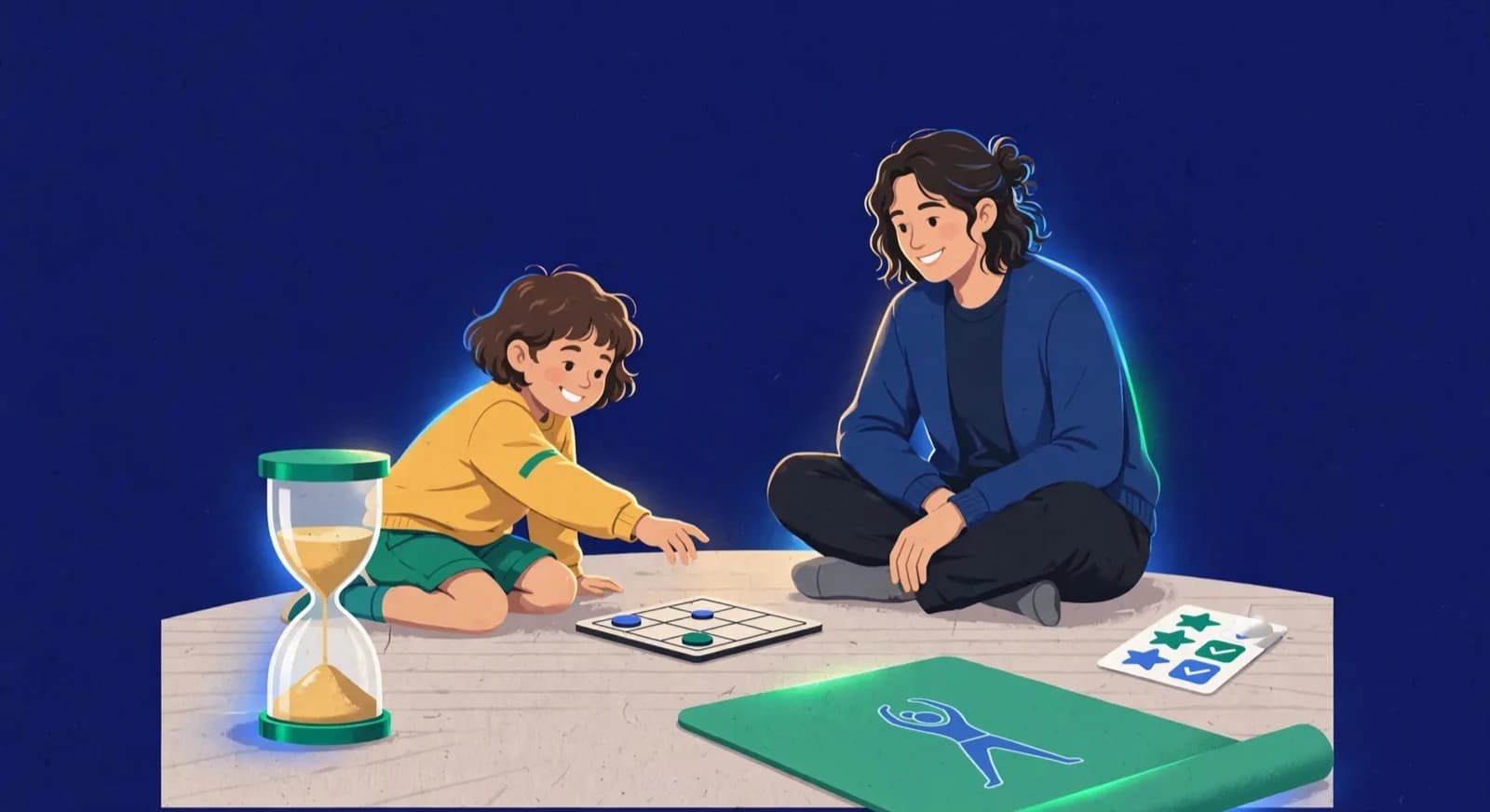
- Start with how each piece moves, one or two pieces per session, using a real board so the child can touch and move them.
- Move to short puzzles that ask a single question, such as which piece can capture the queen, for quick wins and immediate feedback [1].
- Play tiny games with only a few pieces (a king and pawns, then a couple of pieces each) before ever attempting a full board.
- Use a child-focused platform like ChessKid for structured, age-appropriate practice between sessions if screen time is welcome [2].
- Add full games only once the child is comfortable and asking for them, and keep them short and low-stakes at first.
Two framing choices make a difference. First, protect the fun: end sessions on a high note, before boredom or frustration sets in, so the child can leave wanting the next one. Second, praise the process as well as the win, such as spotting a threat or slowing down before a move. A coach can also save a child's simple lessons and homework positions on a free Lichess study to revisit at the next session [3]. If you want a light weekly structure, our chess study plan for students shows how to turn scattered practice into a routine, and our guide to chess for kids at home covers building the habit without a coach.
How do you tell whether chess is working for your child?
Judge chess by whether your child enjoys it and can take part, not by whether ADHD symptoms improve. You cannot read symptom change from behaviour at a chessboard, and that question belongs with the clinician who knows your child. Look for whether they choose to play, whether the tone around losing is softening or sharpening, and whether chess is a calm part of the week.
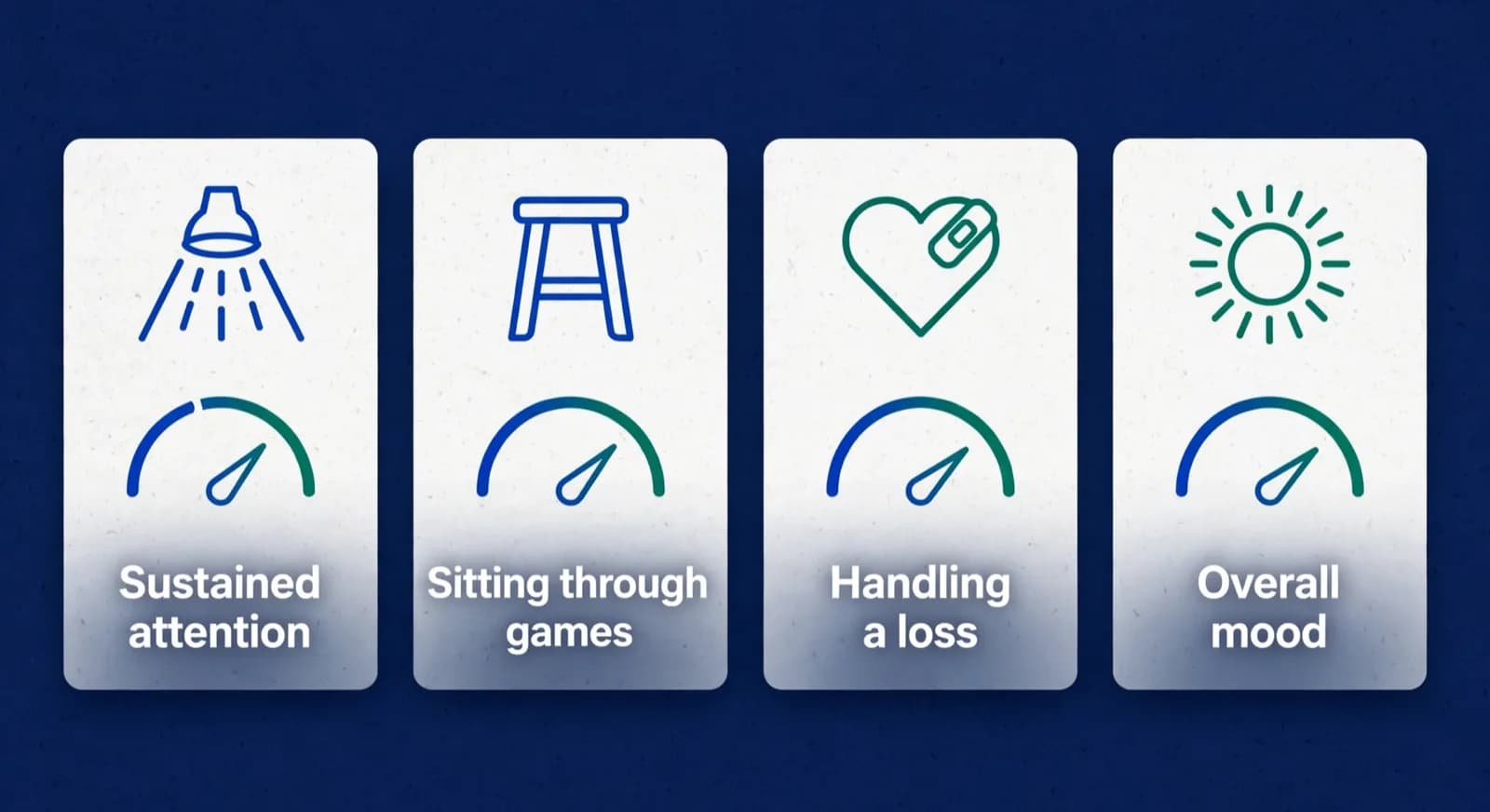
It helps to know in advance what a good sign and a warning sign look like, so you read real behaviour rather than your own hopes. The table below is a rough guide, not a checklist to grade a child against, and it is about enjoyment and access.
| What to watch | Sign it is working | Sign to adjust or pause |
|---|---|---|
| Willingness to play | Asks to play or do puzzles unprompted | Only plays under pressure or avoids it |
| Attention on a turn | Pauses and checks before moving, more often | Rushes every move and cannot settle |
| Handling a loss | Upset briefly, then wants another game | Meltdowns or lasting distress after losing |
| Overall mood | Chess is a calm, enjoyed part of the week | Chess becomes a source of stress or conflict |

Lucas M.
Batch B2 · Thursdays · joined Aug 2025
1342
Academy rating · Lichess games synced
Won vs. 1410 · French Defense
Best gameMissed fork on move 23
Homework setKeep the record simple: after each session, one line on what your child enjoyed and one on what was hard. A rating graph or an attendance record cannot show whether symptoms have improved, so leave them out of this question. Attendance can tell you only whether your child keeps showing up, and a rating tells you about results. If something worries you about your child's attention or mood, take it to the treating professional.
How do you brief a coach, and what should you hear back?
Brief the coach before the first lesson with four things: an activity your child enjoys, an agreed break signal, what the coach should do when your child wants to stop, and how you want to hear about the session. Then ask for a short private note afterwards about what went well and what was hard, rather than a report in front of other children. If you are still choosing a class, our guide to choosing a chess class for your child lists what to ask.
- Enjoys: name one thing your child likes, such as puzzles or games with only a few pieces.
- Break signal: agree a simple, private signal the child can use without explaining, such as putting a hand flat on the table.
- Wanting to stop: the coach lets the child stop or switch to something easier and does not ask them to justify it in front of the group.
- Feedback: a private message after the session about what the child enjoyed, what was hard and anything to try next time.
An illustrative briefing, not a script that any study has tested: "Mia likes the puzzle sets and games with a few pieces. If she puts her hand flat on the table, please let her pause for a minute. If she wants to stop, that is fine, and please tell me quietly afterwards. A short message after class on what she enjoyed and what was hard would help." Adapt it to your child and to what their clinician or school has advised. The same note can go to a home practice partner, and our guide to teaching chess to beginners covers the coach's side of keeping early lessons calm and readable for a restless learner.
Parent updates · this week
14 of 14 sentWeekly recap · Lucas M.
Lucas attended Thursday's class and won 2 arena games. His September report is in your portal.
Receipt · October fee
$180 received via card AutoPay. Receipt saved.
9:42 AMRecap approved by Coach Elena
Open the guardian portal
Own login · nothing to install
Can chess replace ADHD medication or therapy?
No. Chess cannot replace ADHD medication, therapy or any professional care, and it should never be treated as an alternative to them. Chess is a hobby that some families find supportive, not a clinical intervention, and framing it as one risks a child missing help they need. Any decision about treatment belongs with a qualified doctor or therapist following guidance such as NICE NG87, which does not assess chess [7].
The honest, useful position is that chess can sit alongside whatever plan a family already has in place, as one more calm, structured, enjoyable activity a child likes. If chess helps your child practise focusing and coping with setbacks in a low-pressure setting, that is a genuine good, and you can value it without inflating it. If it adds stress instead, dropping it costs nothing. Either way, keep the people who actually manage your child's care in the loop and let their advice, not a hobby, drive the important decisions.
Frequently asked questions
Is chess good for ADHD kids?
Chess can be a good hobby for some kids with ADHD, but it depends on the child and research does not show that it treats ADHD. The game asks a player to pause, scan the board and choose a move, and short puzzle sessions may suit children who find waiting hard. Try it, watch whether your child enjoys it over a few sessions, and keep it only if it stays enjoyable. For anything clinical, speak to a doctor or therapist.
Can chess improve a child's focus and attention?
Chess gives a child voluntary practice at attention, because each move asks them to scan the board, hold an idea and choose, with feedback in seconds. That is different from a demonstrated change in daily life. In the best-controlled trial of chess-based training for ADHD, the main executive-function measure did not clearly improve, though some secondary measures did. Treat any improvement at school or home as a possible bonus, not a promise.
What is the best chess app or setup for a child with ADHD?
A low-pressure setup works best to start: a real board for learning the pieces, plus a child-focused platform like ChessKid or free tactics puzzles on Lichess for short practice with immediate feedback. Puzzles avoid waiting for an opponent, which some children find hard. Keep sessions to ten or fifteen minutes, mix a few puzzles with one tiny game, and stop while the child still wants more. Whether this suits your child is something to observe, not a proven method.
Should chess replace my child's ADHD treatment?
No, chess should never replace ADHD treatment, medication, or therapy, and it should not be presented as an alternative to professional care. Chess is a hobby that can sit alongside whatever plan a family already has, offering a calm, structured activity a child may enjoy, but it is not a clinical intervention. Keep the doctor, psychologist, or therapist who knows your child in charge of any treatment decisions, and let chess be a good thing you try rather than something you rely on.
At what age can a child with ADHD start chess?
There is no fixed age; readiness matters more than a birthday, and it varies a lot from child to child. Some children enjoy the pieces and simple puzzles at five or six, while others do better a year or two later, and either is fine. Start with how the pieces move and short puzzles rather than full games, keep the first sessions brief, and follow the child's interest. Our guide on what age to start chess, and the section on teaching chess to a six-year-old in our guide to teaching a child chess at home, cover pacing and attention span in more detail.
Does chess help working memory or inhibition in ADHD?
One small randomised comparison of 30 children with ADHD, three groups of ten, reports in its English abstract that two chess-training groups differed significantly from a control group on working memory, inhibition and attention (P<=0.05) [6]. The abstract gives no effect sizes, medication details or follow-up, and its English and Persian versions disagree on how many weeks the programme lasted. It is not a reason to replace ADHD treatment with chess, and this guide does not read it as one.
Sources
- [1]Lichess: free tactics training · accessed 2026-06-29
- [2]ChessKid: chess for kids · accessed 2026-06-29
- [3]Lichess Study: free shared analysis boards · accessed 2026-06-29
- [4]Chess.com · accessed 2026-06-29
- [5]Efficacy of chess training for the treatment of ADHD: a prospective, open label study · accessed 2026-10-02
- [6]Comparison of selected chess training programs on working memory, inhibition and attention in children with ADHD (English abstract), journal hosted by the University of Tabriz · accessed 2026-10-16
- [7]NICE guideline NG87, Attention deficit hyperactivity disorder: diagnosis and management · accessed 2026-10-16
- [8]Effectiveness of a Personalized, Chess-Based Training Serious Video Game in the Treatment of Adolescents and Young Adults With ADHD: Randomized Controlled Trial, JMIR Serious Games 2023 (DOI 10.2196/39874) · accessed 2026-10-16
Written by Abhishek Tiwari
ChessCore
Drafted with AI, fact-checked and approved by a human before publishing, the same guardrail our product applies to every report it sends. Read our editorial standards.
See how a chess academy keeps families informed
Book a walkthrough of ChessCore to see attendance records and parent updates that a coach and family can read together. It does not measure ADHD symptoms or replace professional care.
- Roster import from the spreadsheets you already keep
- Lichess and Chess.com connections, batches, and fee plans
- First reports in week one, after your approval
- Free plan, no credit card required