
Bottom line
SCID vs. PC is a real free ChessBase alternative for storing, searching, and annotating large game collections. ChessBase '26 remains better when you need the Mega Database ecosystem, a polished Windows prep workflow, and vendor support. Pick SCID vs. PC for club database work at zero license cost; buy ChessBase when curated commercial databases and integration time pay for themselves.
TL;DR
- ChessBase vs SCID is a database-tool choice: paid Windows professional suite versus free open-source desktop database software.
- Both SCID lines are maintained: original Scid released version 5.2 on 6 March 2026 [7], and the SCID vs. PC fork ships version 4.27 with Windows, Linux and Mac builds plus its own computer-versus-player and interface changes [3][8].
- ChessBase '26 shop packages list at €199.90, €249.90, €349.90, and €499.90, with Windows 10 or higher as the system requirement.
- Original SCID is free and GPL-licensed for managing millions of games with UCI or WinBoard engines; SCID vs. PC keeps that job free.
- Most coaches should start on SCID vs. PC plus free game sources; ChessBase is the upgrade when curated Mega-class prep is weekly billable work.
Key facts
- ChessBase '26 shop packages list Single Program at €199.90, Starter Package at €249.90, Mega Package at €349.90, and Premium Package at €499.90, with Windows 10 or higher as the stated system requirement.[1]
- SCID (Shane's Chess Information Database) is free and open source under the GPL, built to manage databases with millions of games and analyse with UCI or WinBoard engines.[2]
- SCID vs. PC began as bug-fixes for original SCID's computer-versus-player features and evolved into a maintained fork with its own features; the project site ships version 4.27 builds for Windows, Linux, and Mac.[3]
- SCID vs. PC stores databases in its own three-file format (.si4, .sn4, .sg4) and populates them by importing PGN archives and other databases.[4]
- Stockfish is free, open source under GPLv3, and runs locally on ordinary hardware as a UCI engine you can attach to a desktop database GUI.[5]
- Lichess studies provide free shared, chapter-based analysis boards that cover much student-facing prep even when your game archive lives in a desktop database.[6]
Is SCID a real ChessBase replacement?
Yes for the core database job, with one naming caveat. SCID is free open-source chess database software for storing, searching, and annotating huge game collections with UCI or WinBoard engines [2]. For most coaches comparing chessbase vs scid, that is exactly the work they imagined ChessBase would do: keep millions of games searchable offline and attach a strong engine while you annotate. It is not a full clone of the ChessBase commercial ecosystem, and it does not ship Mega Database with a single checkout.
Name the line before you download anything, because there are two maintained projects. Original Scid lives at scid.sourceforge.net, describes itself as free GPL software for million-game databases and engine analysis [2], and released Scid 5.2 on 6 March 2026 [7]. SCID vs. PC at scidvspc.sourceforge.net is the fork: it began with bug-fixes for SCID's computer-versus-player features and grew its own interface work, engine features and release builds, currently version 4.27, with new files posted in 2026 [3][8]. This post uses SCID for the project family and names Scid 5 or SCID vs. PC when the difference matters.
So is SCID as good as ChessBase? For club-scale database work (import PGN, search by player or position, attach Stockfish, export annotated files), SCID vs. PC is good enough that many coaches never need a paid suite [2][3][5]. For professional prep that depends on ChessBase's curated commercial databases, magazine content, and one-window Windows workflow, ChessBase remains the stronger paid product [1]. The honest answer to "is scid as good as chessbase" is job-dependent, not brand-dependent.
How do ChessBase and SCID compare side by side?
They share the same job and split on price, platform, format, and ecosystem. Both tools exist so you can store, search, and annotate large game collections on a desktop; the table below is what the official product pages and project sites actually support as of 16 October 2026, not a hype scorecard.
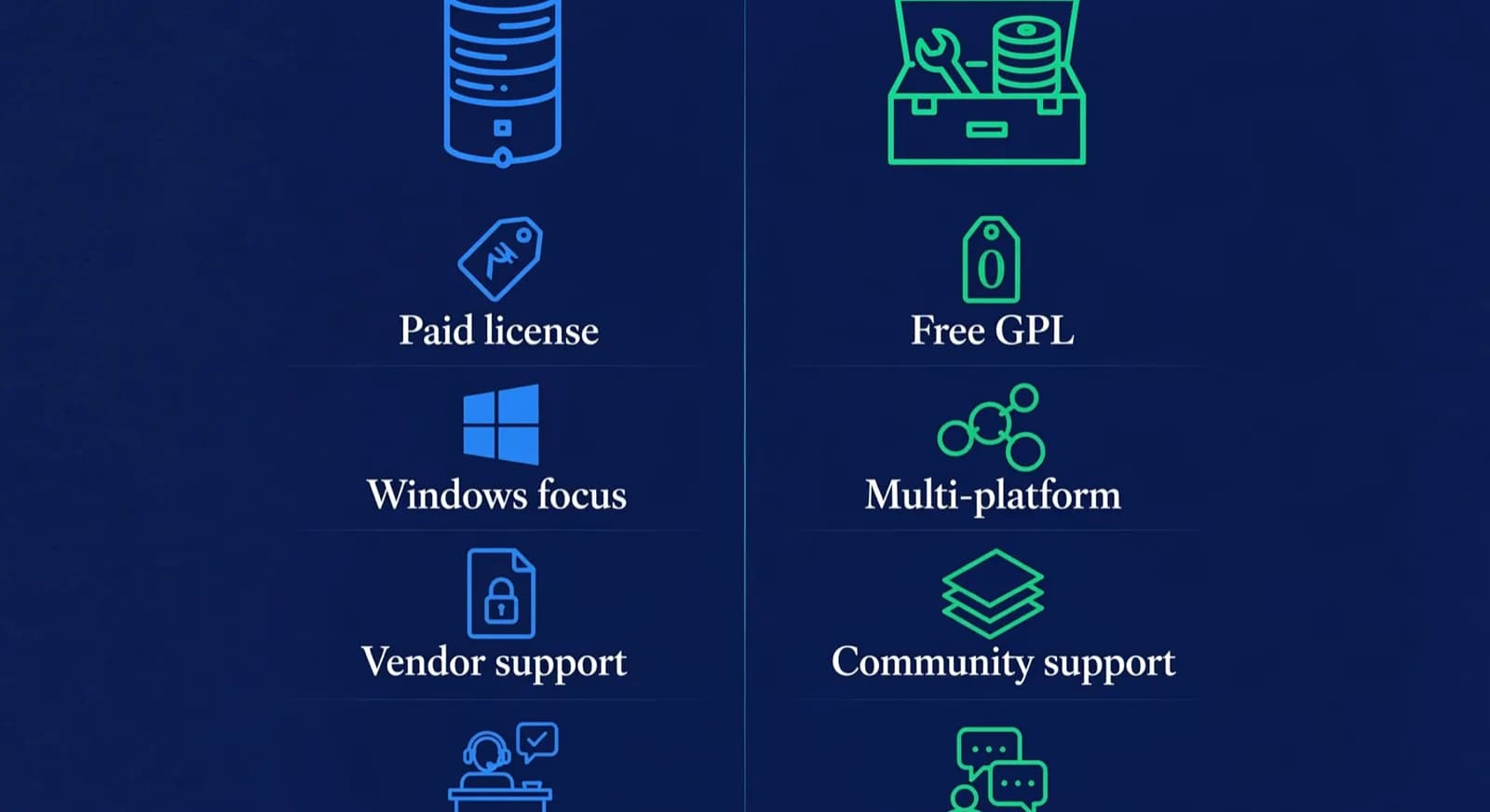
| Dimension | ChessBase '26 | SCID / SCID vs. PC | Why it matters |
|---|---|---|---|
| Primary job | Desktop database research, prep, annotation [1] | Desktop database research, prep, annotation [2][3] | Same job category, different product model |
| License and price | Paid packages €199.90 to €499.90 [1] | Free, GPL [2] | Zero vs multi-hundred-euro entry cost |
| Platform | Windows 10 or higher [1] | SCID vs. PC: Windows, Linux and Mac builds, with the Mac builds Intel only and 64-bit noted as buggy [3] | Linux coaches lean free stack; Mac coaches test the Intel build first |
| Database format | Native proprietary ChessBase desktop format (.cbh family in practice) | SCID three-file DB (.si4/.sn4/.sg4) plus PGN import [4] | Migration is export/import, not dual-open |
| Engine support | Integrated commercial ecosystem plus local engines [1] | UCI and WinBoard engines [2] | Both can run Stockfish-class UCI engines [5] |
| Game scale | Commercial Mega-class databases in higher packages [1] | Designed for millions of games [2] | Both scale; curation is the paid edge |
| Support model | Vendor shop and product support [1] | Community and project documentation [2][3] | Paid continuity vs self-support |
| Best free path role | Not free; paid professional default [1] | Default free ChessBase alternative database [2][3] | Start free unless curation is the product |
Read the format row carefully. ChessBase keeps libraries in its own native desktop database format (the .cbh family of files coaches see in Windows installs), which is proprietary in the practical sense that other programs do not treat it as an open primary store. SCID vs. PC uses its own three-file database (.si4 index, .sn4 names, .sg4 games) and fills it mainly by importing PGN archives [4]. Switching is a planned export/import project, not a one-click dual load of the same files. That friction is real, and it is still cheaper than buying the wrong license twice.
What does ChessBase give you that SCID cannot?
ChessBase gives you a commercial ecosystem, not merely a search window. On the official shop, ChessBase '26 is sold as package tiers that combine the program with larger databases, update services, magazine issues, and account access on the higher SKUs, all on Windows 10 or higher [1].
SCID vs. PC will not drop Mega Database 2026, ChessBase Magazine issues, or vendor-backed update pipelines into your hard drive for free [1][3]. If your weekly product is opponent preparation from curated master collections inside one polished Windows program, ChessBase is better for that job because the paid stack is built around it.
The second non-free edge is workflow polish and support. ChessBase is the long-running professional standard many titled players already exchange files with, and the shop model includes a vendor path when something breaks [1]. SCID vs. PC is capable and free, but you are the integrator: you find game sources, keep engines configured, and read project docs when a feature is unclear [3][4]. For a coach whose billable hour is expensive, that integration time is the real ChessBase price, not only the euro sticker.
- Buy ChessBase for curated commercial databases and package ecosystems [1].
- Buy ChessBase for a Windows-first professional prep environment your peers already use [1].
- Buy ChessBase when vendor support and continuity matter more than license cost [1].
- Do not buy ChessBase only because free SCID vs. PC feels less prestigious [2][3].
What do you give up with SCID?
You give up curation, single-vendor packaging, and Mac polish, not engine strength. SCID and SCID vs. PC are free GPL database tools; they do not include a commercial master-game subscription, and Mac support on SCID vs. PC is documented as weaker than Windows or Linux (Intel builds, with 64-bit noted as buggy) [2][3]. Local Stockfish still supplies world-class evaluation once attached as a UCI engine [5]. The gap is library quality and packaging, not whether the engine can calculate.
You also give up "it just works" onboarding. With SCID vs. PC you import PGN, maintain your own sources (for example Lichess open exports or other public archives), and learn the GUI without a commercial training course [3][4]. For coaches who already live in browser studies for teaching, that cost is small: keep student-facing material in free Lichess studies and use SCID vs. PC only for the offline archive [6]. For coaches who expected ChessBase's magazine-and-database bundle on day one, the free path feels incomplete until they accept they are assembling a stack.

Lucas M. vs. Hana K.
Rapid · synced from Lichess · Tue 7:42 PM
14...Qe6? drops the knight
Eval swings +2.1 · the move to review first
Missed fork on move 23
Same pattern as last Tuesday · drill it
Endgame conversion was clean
Won vs. 1410 · French Defense
Which should a coach or club pick?
A club coach or small academy should default to SCID vs. PC; a prep specialist selling curated research should default to ChessBase. The decision is not taste. It is whether free database software already clears your weekly bottleneck, or whether the ChessBase package price buys hours you currently waste assembling files. Below is the operator arithmetic we use when someone asks scid vs chessbase without naming the stuck job.
Start with three thresholds written on a sticky note. They are illustrative editorial rules of thumb, not measured cut-offs. Threshold A: if you search a large local game collection fewer than two hours a week, you do not have a ChessBase problem yet; a PGN folder plus SCID vs. PC or even browser studies may already be enough [3][6]. Threshold B: if your students need shared lesson files more than you need master-game mining, put teaching in Lichess studies first and keep the database tool as coach-only infrastructure [6]. Threshold C: if you bill clients for opponent preparation from curated commercial collections every week, ChessBase '26 is better for that product because the shop packages exist to sell exactly that workflow on Windows [1]. Crossing C is the only clean "buy now" signal for most coaches.
Cost arithmetic with stated assumptions. Assume a coach values prep time at €30 per hour and currently spends 3 hours a week wrangling messy PGN folders. If SCID vs. PC cuts that chaos to 1 hour after a 4-hour setup weekend, you save roughly 2 hours weekly, about €60 of time value, against a €0 license [2][3]. A ChessBase '26 Single Program at €199.90 then needs a different justification: either SCID vs. PC failed for a concrete weekly job for two weeks running, or the Mega-class packages and Windows polish will save still more time than the free tool [1]. Amortise €199.90 over 24 months and you are near €8.30 per month of calendar time; that is cheap only if you open the program most weeks. A Premium Package near €499.90 is a professional cost of goods decision, not a beginner upgrade [1].
Club and multi-coach edge cases. Case 1: three coaches on mixed Windows and Linux laptops. SCID vs. PC is better because the project ships Windows and Linux builds and keeps the license conversation at zero [3]. Case 2: one Windows-only titled coach who already exchanges ChessBase files with peers. ChessBase is better because file friction with collaborators can erase free-tool savings [1]. Case 3: a school club with no budget and one volunteer. SCID vs. PC plus Lichess studies is the correct stack; buying ChessBase for prestige is a donation to unused software [3][6]. Case 4: a coach who mainly plays students and reviews games, not mining databases. Neither database suite is the first purchase; local Stockfish and a simple review habit matter more [5]. Case 5: Mac-first coach. The SCID vs. PC page lists Intel Mac builds only and does not state Apple Silicon support, so test it on your own machine or fall back to Lichess studies in a browser, rather than forcing a Windows ChessBase seat [1][3][6]. ChessBase announced a native Mac release for November 2026 in a 27 September 2026 newsroom post, but as of 16 October 2026 the shop still lists Windows 10 or higher, so re-check this case once the Mac version ships [9][1].
| Reader | Default pick | Upgrade trigger | Avoid |
|---|---|---|---|
| Club coach, mixed teaching | SCID vs. PC + Lichess studies [3][6] | Weekly curated master prep becomes billable [1] | Buying ChessBase before a free two-week trial of SCID vs. PC |
| Tournament prep specialist | ChessBase packages on Windows [1] | Already living in databases daily | Assuming free tools will match Mega curation |
| Linux coach | SCID vs. PC first [3] | Verified need for ChessBase-only files from clients | Paying for a Windows workflow you will not open |
| Mac coach | Test the SCID vs. PC Intel build, or use Lichess studies [3][6] | The announced native ChessBase Mac release ships [9] | Assuming Apple Silicon support the page does not state |
| Club with shared PCs | SCID vs. PC on each machine [3] | One pro coach needs ChessBase on one seat only | Site-wide commercial licenses for casual users |
- Write the stuck job in one sentence: search, annotate, teach, or exchange files with pros.
- Install SCID vs. PC and import one real PGN archive before any paid checkout [3][4].
- Attach local Stockfish and run one full annotated review session [5].
- If free tools block the same job two weeks in a row, open ChessBase package pages with a written package tier in mind [1].
- If the blocked job is academy operations rather than databases, stop shopping chess GUIs and evaluate operations software separately.
How hard is switching between ChessBase and SCID?
Switching is moderate work: plan on a weekend for export, import, and engine setup, not an afternoon of denial. Because ChessBase native databases and SCID's .si4/.sn4/.sg4 files are different systems, the safe bridge is PGN export from the old library and import into the new one [4].
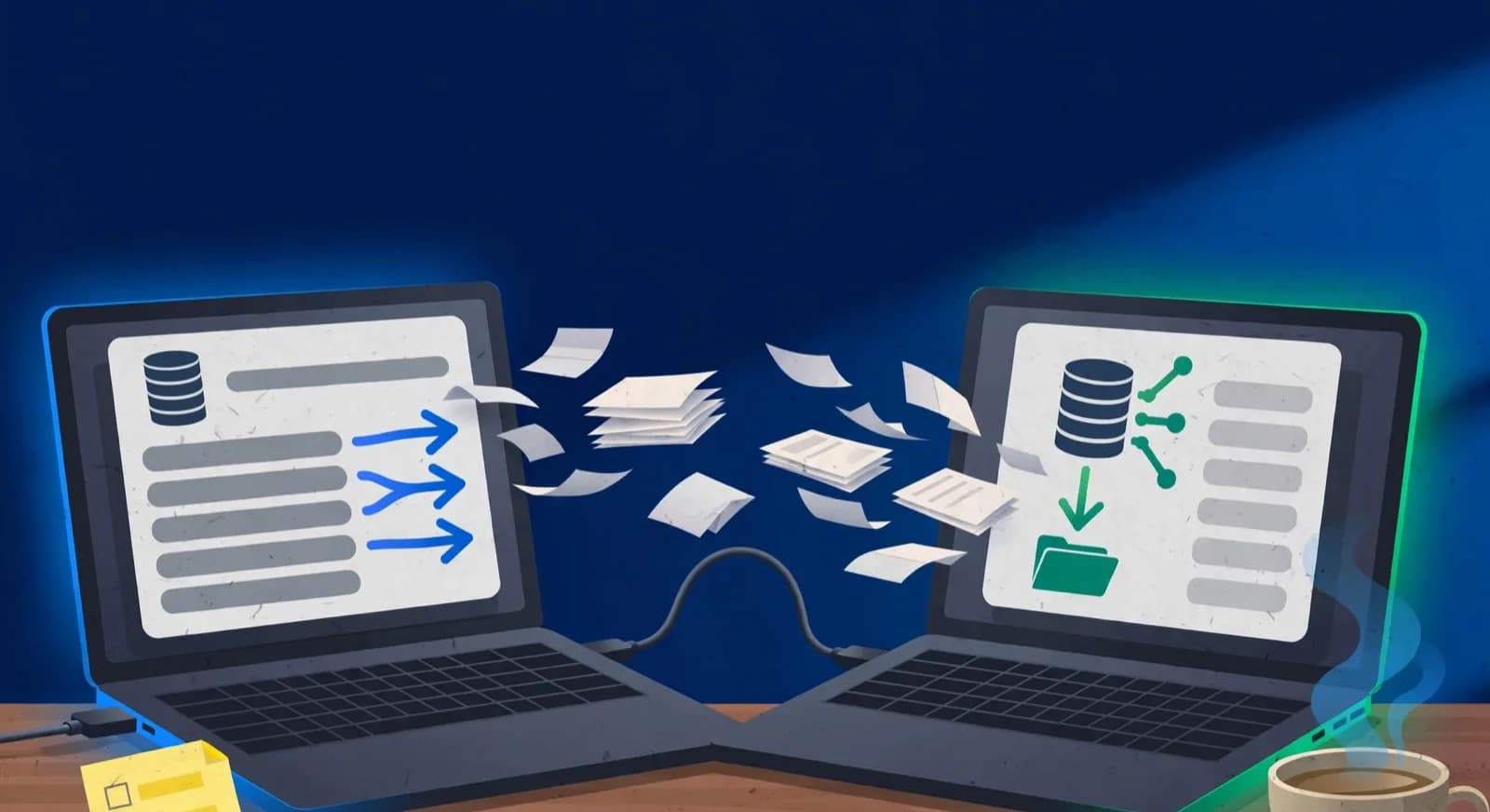
Annotations, variations, and naming conventions need a sample check after import. Judge the 50-game sample by five acceptance checks: player names match the original spelling, comments survive, nested variations survive, non-English text is intact, and a position you know well (say, the board after move 20 of one game) matches. SCID vs. PC's import page says imported PGN must be in English notation, so games with localised piece letters need converting first, and it points large archives to its pgnscid utility rather than the Import window [10]. These are reader checks, not predictions of what will fail. Keep the original archive untouched until the sample passes. Can SCID open .cbh files? SCID vs. PC's page lists PGN import and its own .si4 format, says it reads only polyglot opening books, not ChessBase .ctg books, and does not list .cbh database import [3][4]. The same page describes a different project, Scidb, as supporting ChessBase databases and as having no maintainer now; this review did not test it. For SCID vs. PC, export from ChessBase as PGN first: ChessBase 16's manual says ChessBase reads and writes PGN [11]. Engines must be re-pointed: SCID documents UCI and WinBoard support on the original project page, and Stockfish remains the free default engine choice for almost every club machine [2][5].
Practical migration order that avoids double pain. First, export a small test set of 50 games with variations and comments, import into SCID vs. PC, and confirm what survived [3][4]. Second, rebuild your engine list and one annotation template game so future imports match your house style. Third, move the bulk archive only after the test set looks right. Fourth, keep student-facing teaching in Lichess studies so the database migration does not block Monday's class [6]. Coaches who reverse that order (bulk first, teaching second) create avoidable chaos.
If you are leaving ChessBase, accept that you are also leaving its package ecosystem unless you keep a paid seat for reference databases [1]. If you are leaving SCID vs. PC for ChessBase, budget Windows hardware compliance (Windows 10 or higher) and the package tier that actually includes the database size you need [1][3]. Our ChessBase alternatives guide maps the wider free stack, and our ChessBase vs Chessify comparison covers the separate cloud-engine fork in the road when depth, not database search, is the bottleneck.
What is the final ChessBase or SCID verdict?
SCID vs. PC covers most coach and club database jobs free; ChessBase earns its price through the Mega Database ecosystem, prep workflow polish, and support. Install Scid 5 or the SCID vs. PC fork for a free chessbase alternative database, attach Stockfish, and keep teaching materials in tools students can open without a license [2][3][5][6].
Buy ChessBase '26 on Windows when curated commercial research is weekly, billable, and worth €199.90 to €499.90 of package spend [1]. One boundary note: ChessCore, which we build, is academy management software for rosters, fees, and coach-approved parent communication. It is not a ChessBase or SCID alternative for game databases. If the pain is students and operations rather than PGN archives, evaluate that category after you settle the database tool.
Week of 12 October · all batches
0 conflictsMake-up credit · Mia G. · Sat 4:30 PM
Absent Thursday with notice · booked by Noor
Class reminders sent to 148 families
Timing changes update everyone at once
Frequently asked questions
Is SCID as good as ChessBase?
For storing, searching, and annotating large game collections with UCI engines, SCID vs. PC is good enough for most club coaches at zero license cost. ChessBase is better when you need curated commercial databases, a polished Windows professional workflow, and vendor support. Compare the job you do weekly, not the brand prestige. If free SCID vs. PC has not blocked you for two weeks, you do not yet have proof you need ChessBase.
What is the difference between SCID and SCID vs. PC?
SCID is the original free GPL project (Shane's Chess Information Database) for million-game databases and UCI or WinBoard analysis, and it is still maintained: Scid 5.2 was released on 6 March 2026. SCID vs. PC is a fork that began with bug-fixes for SCID's computer-versus-player features and added its own interface and engine work; its current version is 4.27. Pick Scid 5 for the newer core, or SCID vs. PC for its packaged Windows and Linux installers and documented features.
Is SCID a free ChessBase alternative for databases?
Yes. SCID and SCID vs. PC sit in the desktop database category that coaches mean when they search for a free ChessBase alternative database. They do not include ChessBase's paid Mega-class commercial libraries or magazine ecosystem. Pair SCID vs. PC with free game sources and local Stockfish, and use Lichess studies for student-facing teaching material.
Can SCID run on Mac or Linux?
SCID vs. PC publishes Windows, Linux and Mac downloads, though its own page supports only Intel Macs and calls 64-bit support buggy. ChessBase '26 product pages list Windows 10 or higher as of 16 October 2026, and ChessBase has announced a native Mac release for November 2026. Until that ships, a Mac coach can test the Intel build of SCID vs. PC or use browser tools. Re-check the download notes for your machine before promising a club-wide install.
Do I need ChessBase if I already use Stockfish?
Not for engine strength. Stockfish is free and already covers deep local analysis. You need a database GUI only if searching and organising large game collections is part of your work. That GUI can be SCID vs. PC free or ChessBase paid. Engine choice and database choice are separate purchases in practice, even when one commercial suite bundles both ideas.
Sources
- [1]ChessBase 26 packages, prices, and Windows requirements, official ChessBase shop · accessed 2026-10-16
- [2]SCID: free GPL chess database software · accessed 2026-10-16
- [3]SCID vs. PC: maintained SCID fork, downloads and features · accessed 2026-10-16
- [4]SCID vs. PC database file formats (.si4, .sn4, .sg4) and PGN import · accessed 2026-08-10
- [5]Stockfish: free open-source chess engine · accessed 2026-08-10
- [6]Lichess studies: free shared analysis boards · accessed 2026-08-10
- [7]Scid project files on SourceForge · accessed 2026-10-16
- [8]Scid vs. PC project files on SourceForge · accessed 2026-10-16
- [9]ChessBase newsroom: ChessBase finally on Mac · accessed 2026-10-16
- [10]The Import Window | Scid vs. PC documentation · accessed 2026-10-16
- [11]Saving Games in PGN | ChessBase 16 manual · accessed 2026-10-16
Written by Abhishek Tiwari
ChessCore
Drafted with AI, fact-checked and approved by a human before publishing, the same guardrail our product applies to every report it sends. Read our editorial standards.
Database chosen, academy still to run
If the remaining bottleneck is students, batches, fees, and parent updates rather than PGN archives, see how ChessCore handles operations beside your prep tools.
- Roster import from the spreadsheets you already keep
- Lichess and Chess.com connections, batches, and fee plans
- First reports in week one, after your approval
- Free plan, no credit card required