On this page7 sections, 17 min read
- What is a chess coaching business, versus a hobby or an academy?
- How do you get your first paying clients?
- What systems do you need from day one?
- Should you coach online, local, or both?
- When do you register and formalise the business?
- How do you grow from solo coach to an academy?
- How does ChessCore help run a coaching business?
- Frequently asked questions
Bottom line
To start a chess coaching business, set a price, a weekly schedule and a way to record payments and progress. Find your first paying clients through trial lessons and referrals before buying ads, and agree written terms for missed lessons and payment timing before a family pays. Check the registration and tax rules for where you teach before taking paying clients.
TL;DR
- A chess coaching business is repeatable paid coaching with its own price, calendar, written terms and client records, which differs from casual lessons and from founding a multi-batch academy.
- Look for first clients through trial lessons, referrals and local or school relationships, plus a coach-directory listing if you meet its published requirements [7].
- Keep a prospect record from the first enquiry: source, permission to contact, trial goal, agreed follow-up date and what actually happened.
- Compare online and local coaching by operating surplus and paid occupancy, not by assuming either one is cheaper or that a bigger group always earns more.
- Check registration and tax requirements with a qualified adviser before taking paying clients, and agree written terms for missed lessons, cancellations, payment timing and ending the arrangement.
Key facts
- Lichess studies and training tools are free, so a solo coach can run structured online lessons and set homework positions without paying for teaching software.[1]
- WhatsApp Business is a free app with profiles, quick replies, and labels, which is enough to manage parent enquiries and follow-ups for a one-coach practice.[2]
- A UPI AutoPay mandate lets a payer approve recurring debits once, which cuts manual chasing, though approval does not guarantee that every debit succeeds.[3]
- Online platform ratings are Elo-derived, so a coaching client picks up a visible strength number within their first weeks of rated play that you can track over a season.[4]
- In the demo academy, a made-up academy, student Mateo R. is at an academy rating of 1342, up 118 since June. It is an example of a progress record, not a promise of results.
What is a chess coaching business, versus a hobby or an academy?
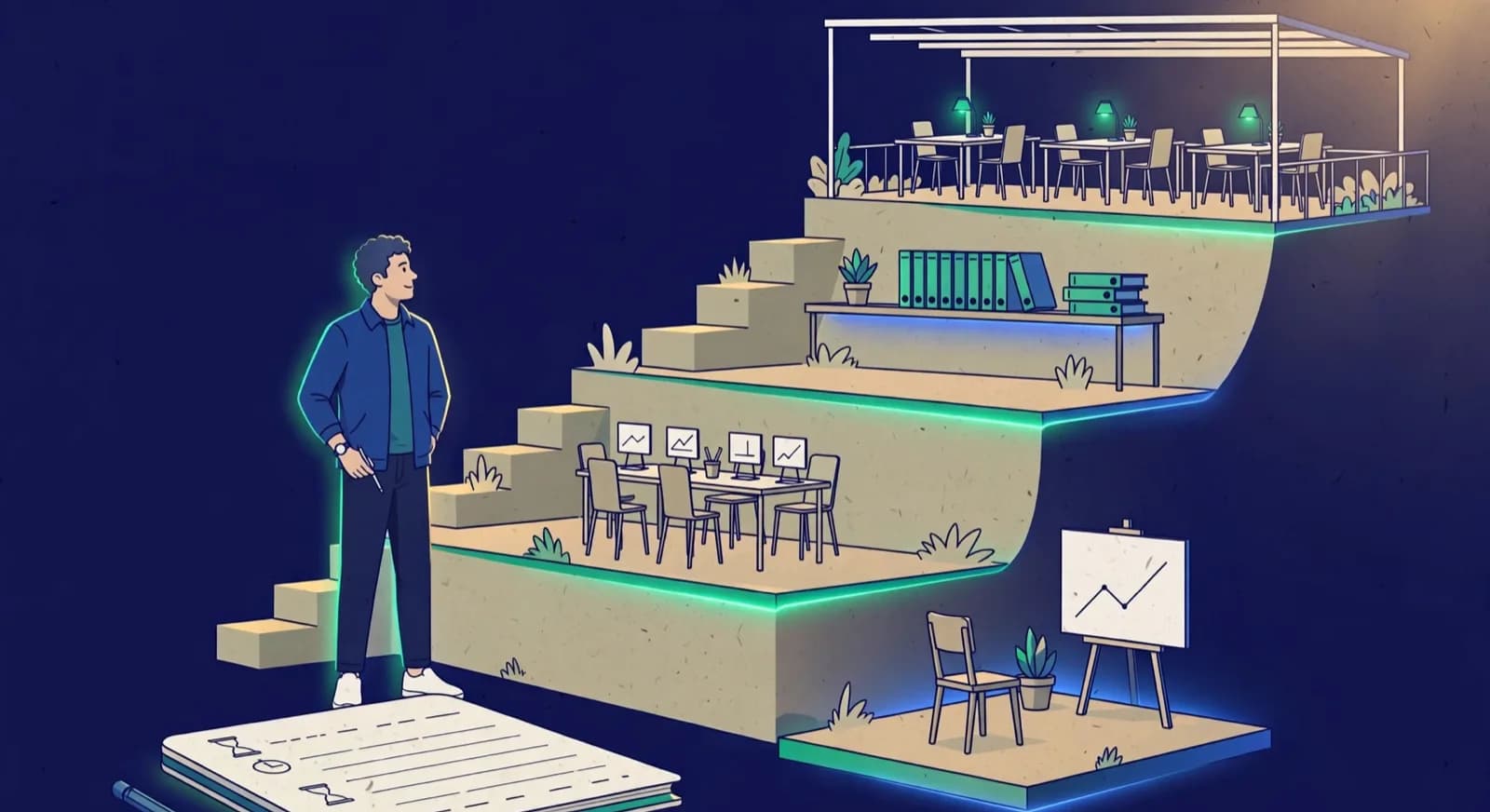
A chess coaching business is repeatable, paid coaching that has its own price, its own schedule, and its own record of who owes what and who is progressing. That is what separates it from a hobby, where you coach a friend's child for free or for whatever they hand you, and from an academy, where you run multiple batches with other coaches on payroll. The business is the middle stage: you are still the coach, but you are now running an operation, however small.
Unpaid fees, missed sessions and scattered progress notes make a paid practice hard to sustain. Record what each family has agreed to, which slot they attend and what the student is working on. Before hiring another coach, make sure you can hand over those records and explain your teaching plan. Treat these as early operating habits, even with a handful of clients. They give you a way to see whether the practice is earning enough and whether you have room to accept another student without stretching your preparation time.
For a solo coach, the immediate task is to make your own lessons pay on a reliable schedule. Set a fee, choose the hours you can teach and reserve time for preparation and parent updates. If you intend to hire coaches and run several batches, plan the venue, curriculum and first-batch costs as well. Our guide to how to start a chess academy covers those decisions, and the chess academy business plan guide helps you put the figures into a working plan. You can build a solo practice first and revisit that larger model when your capacity and demand justify it.
How do you get your first paying clients?
Four low-cost routes find the first clients: trial lessons, referrals, a local relationship such as a school club or community centre, and a coach-directory listing if you qualify. Chess.com's directory and the Lichess coach directory both have entry requirements [7] [11]. Start with the channels where you can explain your teaching and follow up with interested families. A parent who has seen a useful trial has more to judge than a promise in an advert. If you are still deciding whether to coach, our guide to becoming a chess coach covers the skills and credentials to consider before offering paid lessons.
Give the trial lesson a clear teaching goal. Choose one idea the student can show a parent that evening, such as a named checkmate pattern or a tactic, and leave time for them to try it. End with two minutes to discuss the student's level, a suitable slot, the fee and a possible start date. Follow up once within two days using the channel the family agreed to. WhatsApp Business offers a free app for handling enquiries [2]; use a separate business conversation and keep the agreed next step in your client notes.
Keep one simple record per prospect from the first message, so a follow-up never depends on memory and you only contact people who said you could.
| Field | What to write | Why it matters |
|---|---|---|
| Source | School club, referral from a named family, directory listing, walk-in | Shows which route is worth your time |
| Permission to contact | Yes or no, and the channel the parent chose | You only follow up where you were invited to |
| Trial objective | The one idea you will teach in the trial | Gives the trial a result a parent can see |
| Agreed follow-up date | A date the parent heard you say | Turns a vague promise into a commitment |
| Actual outcome | Enrolled, thinking, declined, or no reply, with the reason if given | Lets you fix the trial rather than guess |
Here is an illustrative follow-up message, to adapt rather than copy: "Thank you for bringing Ria to the trial on Saturday. She picked up the back-rank checkmate pattern quickly. I have a Thursday 5 PM slot open for a regular start. Would you like me to hold it until Monday?" The names are invented, and a message like this guarantees no reply rate or time to a first client. It simply gives the parent a specific next step.
Referrals respond to being asked plainly. Tell every happy family that your practice grows by word of mouth and give them one short forwardable message with your trial slot. Families refer coaches who communicate, so a short note about what their child worked on is more useful to them than a discount. Pricing that first slot is its own decision, covered in our guide to how much to charge for chess lessons. To turn a trial into an enrolment, our guide on how to turn a trial into an enrolment walks through the follow-up step by step.
Chess.com's Coach Directory gives eligible coaches a listing route for online students. Its help page, last updated 1 November 2024 and read again on 16 October 2026, requires account verification through a verified title or a premium membership with your real name and card on file. Applicants must also have an established FIDE or nationally recognised federation rating, be at least eighteen, maintain a clear About Me section and relevant avatar, and have a clean community record [7]. Coaches operate independently of Chess.com [7]. The Lichess coach directory invites applications from coaches with an NM or FIDE title, and some listings show an hourly rate [11]. In a 2013 Chess.com article, IM John Bartholomew attributed the vast majority of his clients to the site [8]. That is one coach's experience from 2013, so check today's requirements and watch what your own listing brings.
What systems do you need from day one?
From day one you need four systems working, even in their simplest form: scheduling, fee collection, progress tracking, and parent communication. These are not academy luxuries. They are the four places a solo practice leaks time and money, and the coach who sets them up early spends the next year coaching instead of chasing. The good news is that at one-coach scale each system can start almost free, then consolidate into software once the client count makes the admin painful.

- Scheduling: a fixed weekly timetable, published, so no slot is missed or double-booked.
- Fee collection: a set monthly fee, a fixed due date, and a receipt for every payment.
- Progress tracking: one record per student for rating over time, topics covered, and homework set.
- Parent communication: a single regular channel for updates, enquiries, and follow-ups.
Scheduling is first because a missed or double-booked slot costs you a client's confidence directly. Fix a weekly timetable, publish it, and treat each recurring slot as a commitment on both sides. A shared calendar is enough to begin; the moment you juggle more than a handful of students across different days, a proper timetable view that shows every slot and who fills it saves you from the constant mental arithmetic. Our chess coaching software guide goes deeper on when to make that jump.
Set the fee collection rules before your first paid lesson: the amount, due date, payment method and receipt process. Keep a record of unpaid fees so you can follow up without relying on memory. In India, UPI AutoPay supports recurring payments after the payer approves a mandate [3], and Razorpay documents subscription billing [5]. Stripe Billing supports recurring collection for other payment arrangements [6]. Approval of a mandate does not guarantee that each debit succeeds, so keep a way to follow up. Choose the method that fits your clients and check its fees and payment terms.
Keep a simple progress record for each student: what you covered, the homework set and any rating history you are following [4]. A parent who pays monthly should be able to ask what their child is learning and receive a specific answer. Free Lichess studies let you save annotated lessons and homework positions [1]. Compare the student's recent games with earlier ones and note changes you can show, such as recognising a tactic or handling an opening position with more confidence. That gives the renewal conversation useful evidence without promising a rating increase.
Choose a parent communication channel and agree how you will use it for schedules, fees and progress. WhatsApp Business is one option for managing those conversations [2]. Send a short update after each block of lessons, with the topic covered, a practice task and any upcoming schedule change. Keep the timing predictable so families know when to expect it. If a lesson moves, explain the replacement slot and confirm that it works for the parent. Those small records help prevent a reschedule from becoming a disagreement about what was promised.

Week of 12 October · all batches
0 conflictsMake-up credit · Mia G. · Sat 4:30 PM
Absent Thursday with notice · booked by Noor
Class reminders sent to 148 families
Timing changes update everyone at once
- Missed lessons: what happens if the student misses, and what happens if you do.
- Cancellations: how much notice a family gives and whether a late cancellation is charged.
- Payment timing: the due date, the method and what happens when a payment is late.
- Ending the arrangement: how either side stops, and the notice that applies.
The list above is an illustrative written-terms checklist. Agree the terms before a family pays, in writing the family can find again. Our guide to writing a missed-lesson policy goes through make-up classes and credits in detail.
Should you coach online, local, or both?
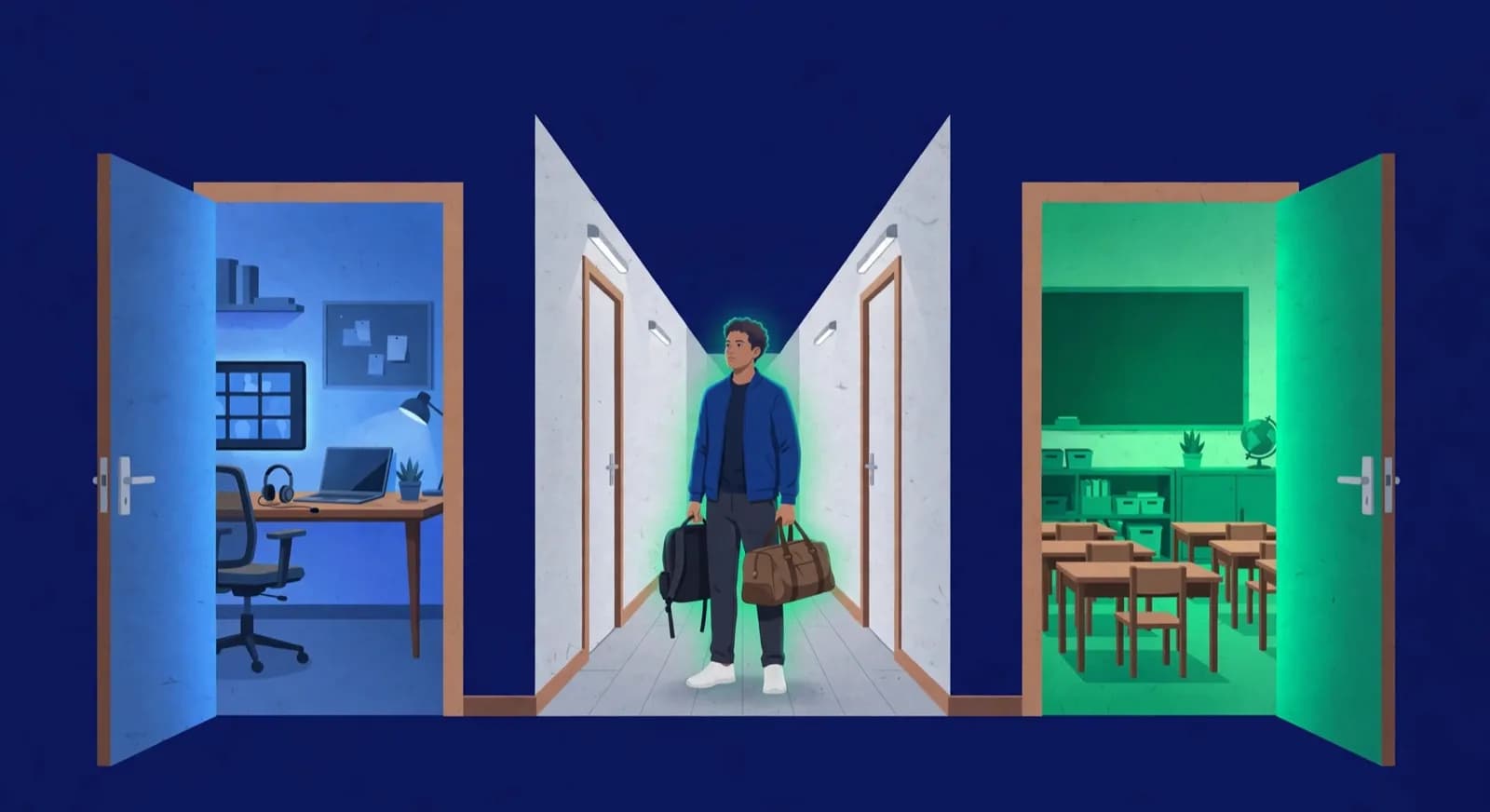
Choose online if your clients are older students or adults spread across cities, and local if your clients are young children whose parents want supervision, and add the second format once the first is reliably full. Online removes travel and widens your reach, and can make attention harder to hold with under-tens. Local coaching can build trust with young families, at the cost of catchment and travel time. Neither is cheaper by default: the table below compares the costs they usually carry.
| Factor | Online coaching | Local coaching |
|---|---|---|
| Best client | Teens, adults, remote students | Ages 6 to 12, local families |
| Reach | Anywhere with a connection | A few kilometres or a school |
| Main cost | Video and board tools, plus payment fees | Travel time, sometimes a venue |
| Teaching tools | Lichess studies and shared boards [1] | Physical board plus online for homework |
| Main risk | Young students drifting off camera | Small catchment capping your income |
Run the money before you choose. Gross receipts are the rate per student per class, times students per batch, times classes per week, times batches. The operating surplus before personal taxes is what remains after the costs that scale with sessions. It still has to cover your own teaching and preparation time, so the last row converts it into an hourly figure. The example uses illustrative US dollar figures, not market rates, and assumes every seat pays every class.
| Line | Illustrative figure | How it is worked out |
|---|---|---|
| Rate | $20 per student per 60-minute class | Your price, set after a few trials |
| Weekly gross receipts | $600 | $20 x 5 students x 2 classes x 3 batches |
| Monthly gross receipts | About $2,600 | $600 x 4.33 weeks |
| Venue | About $650 a month | $25 per session x 6 sessions x 4.33 weeks; $0 if fully online |
| Tools and video | $60 a month | Assumed; many coaches start on free tools |
| Payment fees | $50 a month | Assumed; check your gateway's published pricing |
| Operating surplus before personal taxes | About $1,840 | $2,600 minus $650, $60 and $50 |
| Surplus per owner hour | About $43 an hour | $1,840 over 43 hours (6 teaching plus 4 preparation and admin hours a week) |
Three things fall out of this example. With no venue line, the same three batches leave about $2,490 of surplus, but only if the online students pay as reliably as the local ones. Dropping from five to four paying students a batch lowers gross receipts by about $520 a month, which is more than the tools and fees together, so paid occupancy matters more than a software saving. And the group-versus-private choice depends on the same inputs. Four $20 seats bring in $80 a session, about $50 after roughly $30 of venue and tool cost, so a hired-hall group only matches a $50 private hour at four paying students. Change the seat price, the cost or the number who pay and the answer moves.
Begin with the format you can fill and teach well, then add the second once your schedule is stable. One possible mix is local weekend lessons for younger children and online weekday slots for teens or adults; test whether it fits your clients and travel time before offering it. Keep both formats on one timetable and in one fee ledger so you can see your total workload, and leave a buffer between lessons where switching location would make you late.
When do you register and formalise the business?
Check the registration, tax and local operating requirements that apply before you take paying clients. They depend on where you teach, how you are set up and who you teach, so a general guide cannot give you the answer. A venue lease, a school contract or a first hire is a reason to review them again. Separate coaching income from personal spending from the first payment and keep invoices, receipts and expenses together, so your adviser has records to work from.
Bring this checklist to a qualified adviser:
- Where you teach: your home, a rented room, a school or online, and in which states.
- The business form you propose, such as a sole proprietor, a partnership or a company.
- Projected receipts for the year, month by month.
- Who pays you: families in India, families abroad, or a school or club under contract.
- Any school contract or venue lease you plan to sign.
- Any hire you plan to make, even part time.
Udyam is a separate question from tax and from permission to trade. It is the Ministry of MSME's free online registration for micro, small and medium enterprises, and the portal warns that only its own site is official [12]. Check its current eligibility and process there before you act. GST depends on your services, your state, the level of your turnover and whether students are in other states or abroad; our guide to GST for chess coaching in India covers the rules and their conditions, and gst.gov.in has the current text. If you want a federation credential, the certification guide explains the routes. Business compliance and coaching credentials are separate decisions: completing one does not settle the other.
How do you grow from solo coach to an academy?
You grow from solo coach to academy when your own calendar is full and demand keeps arriving, by hiring your first coach and running batches instead of only one-to-one slots. The trigger is a good problem: a waitlist you cannot personally clear. Growing before that point means paying a coach to sit in empty slots, which drains the cash your solo practice built.
The shift changes what the business is. As a solo coach you sell your own hours; as an academy you sell a system that other coaches deliver, which means standardising your curriculum, your fee model, and your parent communication so a second coach can match your quality. Everything you put in place as a solo operator, the schedule, the fee collection, the progress records, the parent updates, becomes the operating backbone the academy runs on. That is why building those systems early is not over-engineering: it is laying the track you will later grow along. When you reach that point, our guide to how to start a chess academy is the next step, and the WhatsApp playbook for academies covers parent communication at multi-batch scale.
Not every coach should become an academy, and that is a legitimate choice. A full solo practice of well-served clients paying reliable monthly fees is a good business on its own, often with better margins and less stress than a small academy. Scale because demand pulls you there, not because growth feels obligatory.
How does ChessCore help run a coaching business?
ChessCore, which we build, puts the four day-one systems on one platform: batch and slot scheduling, fee records with receipts, attendance and rating records per student, and parent updates. UPI AutoPay and Stripe billing start on the Grow plan; the Core plan covers up to 100 students with batches and recurring schedules, and plan details are on the pricing page. Its AI copilot drafts progress notes that wait for you to approve them, while class and fee reminders go out automatically on a schedule you switch on, and engine evaluations come from Stockfish, not from a language model. It runs the business side, not the teaching, and it is not a player-facing AI coach.
Fees · October · all batches
136 of 148 paidCollected · this term
92%Lucas M. · October · $180
Card AutoPay · receipt sent to Müller family
Mia G. · October · $180
Payment link opened in WhatsApp
Batch B2 · 12 of 14 paid
No bank-transfer screenshots needed
AutoPay mandates · 41 active
Renew monthly without reminders
Frequently asked questions
How do I start a chess coaching business?
Set a price, a weekly schedule and a way to record payments and student progress. Find your first paying clients through trial lessons and referrals before spending on ads, and keep a prospect record from the first message. Agree written terms for missed lessons, cancellations and payment timing before a family pays. Check the registration and tax requirements that apply where you teach before accepting paying clients.
Is chess coaching a good side hustle to grow into a business?
It can be, if you have the teaching skills and a few reliable weekly slots. Start with one or two evenings, check any setup costs and reserve preparation time before adding students. Set a price, collect fees on an agreed schedule and keep progress notes. When those hours fill, review whether demand and income justify another slot or a second coach. Check business and tax requirements at the start, not when growth arrives.
Do I need a chess coaching business plan to start?
A long plan is not necessary, but a one-page plan helps: your price per slot, your weekly capacity, how you win the first clients and how you collect fees. That fits on a single page and is more useful because you will actually update it. A full academy business plan only becomes necessary when you move from solo coaching to running batches with hired coaches.
When should I register my chess coaching business?
Check the requirements for your location and business structure before taking paying clients. They can depend on what you provide, where you teach and who pays you, so do not assume they start only once monthly fees are reliable. Review the position before signing a venue lease, school contract or first hire, and ask a qualified local adviser which registrations and deadlines apply.
What is the difference between a chess coaching business and a chess academy?
A chess coaching business is one coach selling their own hours to a client base, while a chess academy runs multiple batches delivered by hired coaches. The coaching business is the earlier stage, where you are teacher and operator at once. You grow into an academy when your own calendar is full and demand keeps arriving, which is a separate playbook covered in our guide to starting a chess academy.
Do I need to be a certified chess coach to start the business?
Check the requirements where you intend to teach; a federation credential and permission to run a coaching business are separate matters. FIDE's Trainers' Commission awards titles after seminars and an exam [9], and the US Chess coach programme page said on 26 August 2025 that applications were paused [10]. Confirm availability before applying. Our chess coach certification guide covers the credential routes.
Sources
- [1]Lichess Study: free shared analysis boards · accessed 2026-07-08
- [2]WhatsApp Business · accessed 2026-07-08
- [3]UPI Autopay for Recurring Payments | NPCI · accessed 2026-10-16
- [4]Elo rating system · accessed 2026-07-08
- [5]Razorpay Subscriptions documentation · accessed 2026-07-08
- [6]Stripe Billing documentation · accessed 2026-07-08
- [7]How do I find (or become) a chess coach? Chess.com Help Center · accessed 2026-10-16
- [8]Growing Your Chess Coaching Business with Chess.com, John Bartholomew, 2013 · accessed 2026-10-02
- [9]Organising and participating in a FIDE trainer seminar, FIDE Trainers Commission · accessed 2026-10-02
- [10]Certified Chess Coach Program, US Chess, updated 26 August 2025 · accessed 2026-10-02
- [11]Lichess coaches directory · accessed 2026-10-16
- [12]Udyam Registration portal, Ministry of MSME, Government of India · accessed 2026-10-16
Written by Abhishek Tiwari
ChessCore
Drafted with AI, fact-checked and approved by a human before publishing, the same guardrail our product applies to every report it sends. Read our editorial standards.
Run your coaching business on one system
ChessCore handles scheduling, fee collection with receipts, progress records, and approved parent updates from your first paying client onward, so your evenings go back to coaching.
- Roster import from the spreadsheets you already keep
- Lichess and Chess.com connections, batches, and fee plans
- First reports in week one, after your approval
- Free plan, no credit card required